"Bliss was it in that dawn"

posted by k
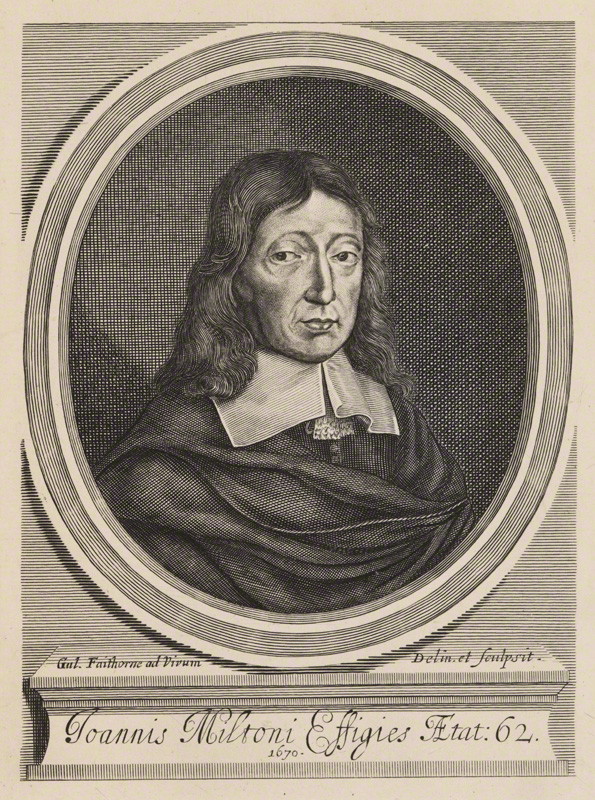
John Milton was born 400 years ago today. In his pamphlet, Areopagitica, after which this blog is named, he argued for the free exchange of ideas and knowledge. There were limits to his ideas of freedom of the press but he sketched out, in ringing tones, his belief that liberty and progress were dependent on the search for knowledge, truth and understanding.
Milton's ideas came out of that anxious and hopeful period in English history when parliament was at war with the king. He wrote this pamphlet three years before the Putney Debates in which, for the first time, the idea of one man one vote was advanced, and five years before the execution of Charles I and the establishment of the English Commonwealth. It was a period of immense danger, of grief and the separation of families. It was also a time when individuals questioned authority and took responsibility for debating the future of the country.
 Areopagitica shows the excitement of debate at the time, when so many people were willing to look outwards and think questioningly about the world, risking their own safety to enter in a debate about the government of their country. Key questions hinged on liberty and what we would now call "human rights":
"Behold now this vast City: a City of refuge, the mansion house of liberty, encompast and surrounded with his protection; the shop of warre hath not there more anvils and hammers waking, to fashion out the plates and instruments of armed Justice in defence of beleaguer'd Truth, then there be pens and heads there, sitting by their studious lamps, musing, searching, revolving new notions and ideas wherewith to present, as with their homage and their fealty the approaching Reformation: others as fast reading, trying all things, assenting to the force of reason and convincement. What could a man require more from a Nation so pliant and so prone to seek after knowledge. What wants there to such a towardly and pregnant soile, but wise and faithfull labourers, to make a knowing people, a Nation of Prophets, of Sages, and of Worthies. We reck'n more then five months yet to harvest; there need not be five weeks, had we but eyes to lift up, the fields are white already. Where there is much desire to learn, there of necessity will be much arguing, much writing, many opinions; for opinion in good men is but knowledge in the making."
Milton lost and the cause he loved - the Commonwealth - faded. After eleven years, Charles II was invited back by parliament. The leaders of the Commonwealth were hanged, drawn and quartered for their part in the execution of the king. Milton was lucky to survive.

But the ideas of Milton and his contemporaries lived on. In the nineteenth century, working-class radicals were among the most enthusiastic readers of Milton. Thomas Cooper, the self-taught Leicester Chartist, set out to learn the whole of Paradise Lost by heart before he was twenty. He managed only the first three books but Milton's ideas - and other ideas of the 1640s - influenced his writings and popular public lectures.
Milton was in the mainstream too. When English literature became part of formal education in the 19th century, Milton was taught as one of England's great authors. He turned up in classrooms and on the curriculum for A-level English. I remember being shocked when, in 1988, Conservative Education Secretary Kenneth Baker pioneered a National Curriculum in English - and left John Milton out. The mid-17th century was represented instead by a smattering of minor poetry. The great English-language epic - not to mention the plays and essays - was omitted.
Tony Blair's government didn't reinstate Milton. They were more concerned with the appearance of improvement than offering teenagers challenge and excitement. I don't suppose Milton's willingness to question authority suited either Conservative or New Labour governments. I haven't noticed much teaching about the 17th century in school history lessons. It's certainly possible to leave school without knowing that England was ever a republic. I suspect it's possible to leave university with a degree in English without reading a word of Milton. It's certainly rare for students to read the pamphlets.
Reading Milton was my introduction to Britain's radical past. I read most of Milton for pleasure - I loved the exhilaration of his language as well as his engagement with the ideas of his time. It didn't matter that some was difficult. I took what I could from a first reading and returned later, for more. Milton may have slipped from the public consciousness but I don't think he'll be forgotten for ever.
Happy 400th birthday, John Milton - and thank you.

Labels: censorship, debate, education, freedom of speech, government, human rights, John Milton, liberty, truth
posted by areopagitica at 11:56 am
0 comments