Wednesday, November 03, 2010

"and yet you say this is a righteous government"

posted by k

Back in April and early May, voters took their responsibility seriously. Viewing figures were high when the party leaders debated plans and policies. The young people I knew, voting in a General Election for the first time, were particularly conscientious, reading on-line manifestos, attending meetings – even turning out applaud or argue with party leaders.


Some council officials hadn't expected the rush of voters. Polling stations ran out of ballot papers, made voters queue for hours and even turned them away at the end of their long wait. There were complaints, enquiries. Some polling stations faced a near riot. People wanted to be part of a democracy and were affronted when they lost their opportunity to affect the future of their country.

It didn't turn out like that. The politicians who found themselves in power quickly changed their views. The election result suggested divided opinions and fierce, unresolved debates. People really believed that a democracy gave them responsibility to think through political questions. On most days of the election campaign I found myself discussing political questions, sometimes with mere acquaintances or strangers encountered on a train. Most expressed frustration that no politician fully represented their views but they listened, read and chose the agenda that seemed nearest to what they wanted.


All we had to go on were the stated words and policies of the candidates. When politicians said they and their parties were opposed to torture, against arms sales, in favour of civil liberties or opposed to a surveillance society, we had to believe them. When candidates and their party leader signed guarantees to vote against any rise in students' tuition fees – and campaigned among students on the basis of that policy – they demanded our trust. They didn't give vague hints but firm undertakings.


In the early days of the Coalition, there were hints that promises would be ditched and that the views of the electorate counted for little. If the electorate as a whole had voted for uncertainty, which implies further debate, the result could be ignored. We were to be given stability and firm government. “Politicians know best,” was the underlying message.

Some buzz-words from the campaign persisted. There were frequent references to fairness, freedom and the big society. Perhaps there were grounds to wait and hope for the best. Quite a few tories attacked state repression under the last government. It seemed reasonable to hope they would take their own statements seriously. While the cabinet seemed to include too many public-school and Oxbridge-educated millionaires, surely they would notice the limits of their own narrow experience of life, at least to the extent of seeking advice from other party members?

Gradually hope faded. Ending detention of child asylum-seekers wasn't immediate and didn't mean exactly what it said. Guidelines were changed so that quite young teenagers, who arrived in Britain alone, could be deported to war zones. Deportations - by private companies working for profit - continued to be brutal. One man died - the investigation continues. Passengers who objected to what they saw as brutality were bundled off their flight and held under anti-terror legislation.

There's worse. Craig Murray joined the Liberal Democrats and campaigned for them because they opposed evidence from torture. His analysis of the recent speech by MI6 head John Sawers suggests that Liberal Democrat ministers now accept "evidence" gained from torture overseas, implicitly encouraging the continuation of torture.

ID cards were scrapped but a new form of surveillance was encouraged. Every e-mail, web-search or telephone call made by a British resident is to be logged for government scrutiny. The excuse is the familiar one: the everlasting War on Terror. The census will probably be ended but instead private companies will be paid to gather data. The companies used already carry out investigations on our credit-worthiness. I'm not happy that the government should keep a file on me whose details combine my family circumstances and religious practices with details of my bank accounts and recent purchases.

Then there are the cuts. Party leaders knew - or should have known - they were coming. All three candidates for chancellor agreed the cuts would be severe - worse than anything we had ever known in the post-war period. Yet the candidates continued to make promises. Education Maintenance Allowances for 16-18 year-olds would be preserved. All Liberal Democrat MPs would vote against any increase in tuition fees. Whenever a pre-election promise was questioned, the party representatives assured us they had all been costed out.

Now they insist it's all different. Apparently what you say to win an election is different from the actions you take when the election is - more or less - won. We weren't supposed to vote for the manifestos or the promises. We were simply supposed to select the most personable liar.

You can still read the manifestos of the Liberal Democrats and the Conservative Party. Traces of the parties' campaign promises survive on-line. They ring hollow now.

So do Coalition protests that they didn't know how dire the economic situation was. Four days before the election I wrote about the ways in which politicians from all parties were ducking the question of the economy in favour of offering minor bribes to voters.

There could have been a real debate. The voters were interested, eager to be involved. But the election was based on false premises and a series of policies and promises that were junked with little hesitation. What was the election worth? What was it about?

I suppose the election was about power - the government's power over us.

If our system of "democracy" is based on guesswork and false promises, how can we call it "democracy"? The people are supposed to have power - that's what the word "democracy" means. Without knowledge and honesty, we can't make the serious judgements required of us. But if we don't live in a democracy, what system are we in? I wonder how far I'm bound by the country's laws when they're passed by MPs elected on a platform of pretence.

Most of all I feel conned. I thought that words like "pledge" or "guarantee" stood for something. They didn't. Silly, silly me.


Labels: , , , , , , , , ,

Saturday, April 24, 2010

"Think you there was, or might be, such a man?"

posted by k

When I began this blog, I was inspired by two men.


Gerard Mulholland lived in a Paris suburb.
For many years heart problems and, more recently diabetes, affected his capacity to work and travel. This didn't end his concern with the state of the world and with human beings. From his computer he engaged in political debate – on public message boards and through email correspondence with his friends. He was always concerned with questions of liberty and the related question of equality. In his discussions on public forums his unusual sense of democracy shone – he was as happy at a lively debate on the Sun message boards as in forums run by the BBC, the Guardian or Republic. His concern was dialogue and, while he would put his own view as forcefully as he could, he would listen to what other people said and question his own assumptions. Despite his occasional assertions of pessimism at the state of the world and human beings – he never stopped being shocked by the cruelty people could inflict on one another – he also wanted to do his best for the world and his fellow humans.

David Rose was a poet who worked in Colne in Lancashire. He had practical skills, an understanding of engineering and was also a successful barman. Only those who have never worked behind a bar think that's an easy job – the best bar staff care not only about the quality of beer they serve but also about their customers and colleagues. David cared about serving good beer but he cared for people even more. This brought him into all kinds of local projects, including work on the Millennium Green, an open space in Colne. Like Gerard, he saw people – including those who were disregarded - as equals and was good at finding the skills they could bring to share in local projects. I imagine that some of these qualities had been honed when he was involved in the free festivals movement. He was used to seeing past the damage that people had suffered to find their real value. His concerns for liberty and humanity led him to a critical analysis of the way in which the voluntary – or third – sector was being hijacked by the state. Most recently, his worries about state surveillance and intrusion led him to advance detailed arguments about the ways in which government policy was finding people guilty not just of thought-crime but of pre-crime – he noted the ways in which government agencies were asked to identify potential criminals at nurseries and earlier – even among babies before birth. While Gerard's contribution to Areopagitica was through the comments he made, David posted thoughtfully to the blog.


Both Gerard and David had rejected careers that would have aligned them with the establishment. Gerard turned down the offer of pupillage as a barrister in a well-known set of chambers to become a tour guide. In the 1970s this enabled him to take part in Liberal politics, always on the radical wing of the party. David, whose degree was in engineering, worked initially in big industrial companies - what today are called multi-nationals - but he left this career to live outside a system with which he felt little sympathy. Neither was rich – they lived with the everyday worries about family and bills that most people experience. Neither lived a perfect life – nor claimed to do so. Both acted at times in ways they later regretted, would be angry on occasion – and then would apologise. They were critical of themselves and their actions but offered sympathy and understanding to the mistakes and flaws of friends.

If Gerard and David were standing in the current general election, the media would probably spend a lot of time raking through their lives and assuring the electorate that they were too flawed to represent us in parliament. We're encouraged to support candidates with perfect pasts, photogenic family lives, who never lose their temper or question the received platitudes of political life (although these change from day to day). In the past thirty years, photogenic men and women with perfect pasts have dismantled a caring society, created and encouraged chasms of mistrust and intolerance between groups and individuals, built a surveillance state, permitted and encouraged torture, condoned illegality, led the country into wars and bombed cities into such pain and chaos that only hatred remains - but our clean-living, respectable leaders have wrapped up their actions in neat, media-friendly soundbites.

Gerard and David were prepared to ask difficult questions and reach uncomfortable conclusions. They cared that human beings had the opportunity to live free and fulfilling lives and take part in genuinely thoughtful political debates. I wish I had the chance to vote for them.


Gerard died in July last year. His health had been deteriorating for a long time but he seemed immortal. The last text message I received from him, which must have been sent about an hour before he died, rejoiced that the right had “done their duty” and voted against Marine Le Pen in the Pas de Calais mayoral election.


David died at the end of December. He was on his way back from a holiday on Skye with his wife and a friend. I've seen some of his photos from that holiday. Again, my last communications from him were text messages. Before his holiday he delighted in the unlikely sight of of seventeen mountain-biking santas arriving at the pub where he worked. On Skye he observed the sea frozen at the loch-heads.


I feel uneasy writing an obituary for Gerard and David even now. They are mourned by family and friends who knew them better than I did. Much of my friendship with them was maintained and developed through emails and telephone calls. It wasn't just a correspondence about politics. There were poems, music, ideas, history and lots of jokes. I miss them a lot.

I wondered for a long while if I could continue this blog without them – it was born out of debate and shouldn't be a monologue. I think I shall continue but Areopagitica is bound to change without their contribution.


When I consider how to vote in the general election - and I'm still thinking about it - I recall the discussions I had with Gerard and David. I think about the principles of freedom and equality – and how these need to be rooted in a care for all human beings. I'll try to blog more about this later.

Labels: , , , , , , , , , , , , ,

Tuesday, April 28, 2009

Craig Murray gives evidence today

posted by k

Craig Murray, sacked as British ambassador to Uzbekistan and smeared by New Labour for the offence of publicly opposing British collusion in torture, gives evidence to the Parliamentary Human Rights Committee today (Tuesday 28th April) at 1.45 p.m.

Read more HERE.

Watch Craig Murray's evidence live at the parliamentary website HERE.

This is the first time Craig Murray has been able to give his evidence officially although he first spoke out in 2004.

I hope the press will cover his evidence - it's still important.

Labels: , , , ,

Friday, August 15, 2008

"Know that we are still here; that we live."


posted by k

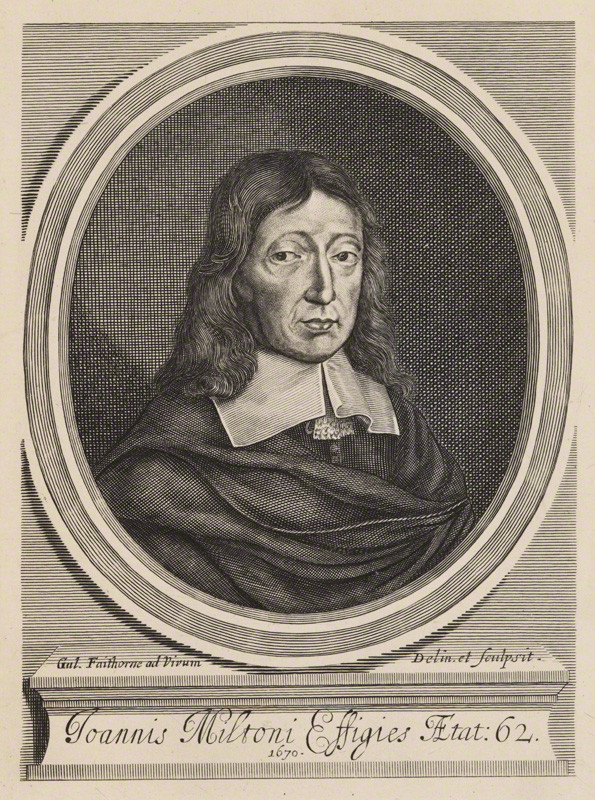
In 1660, the restored monarchy of England faced the problem of what to do with John Milton. Milton wasn't just an uncompromising republican, who had recently published the pamphlet The Ready and Easy Way to Establish a Free Commonwealth. He had also responded to the monarchist pamphlet, Eikon Basilike, with his own Eikonoklastes, defending the right of the Commonwealth government to execute Charles I. This made him, in the eyes of Charles II's government, a regicide and the penalty was death by hanging, drawing and quartering. The corpses of dead regicides were disinterred, executed and the decomposing quarters put on public display.

Milton was discreet enough to retreat from London to Chalfont St Giles. It's said his friends and admirers intervened on his behalf, suggesting that his blindness was a divine punishment and that it would be wrong for the king to punish the poet further. The poet was allowed to live and completed his great works of the Restoration: Samson Agonistes, Paradise Lost and Paradise Regained.

States often have to cope with poets who oppose their regime. This isn't because poets are naturally in opposition - there's also a history of poets supporting the government with fawning praise. Virgil's praise of the Emperor Augustus is excellently done but leaves a nasty taste in the mouth. Shakespeare included neat compliments to the monarchs he served in his plays. He knew who paid the bills.

But the way states treat poets and creative artists who oppose them often goes down in history. Regimes that mistreat their poets seem particularly barbaric - afraid of words and their power. The voices of poets survive.

The Jerusalem Post knows it cannot ignore the death of the great Palestinian poet Mahmoud Darwish. Darwish's voice can still be heard - full of power even when I cannot understand the words. The words of his poems - in their original Arabic and in English translation - can be found in libraries throughout the world and on the web.

Mahmoud Darwish's funeral was also reported throughout the world.

There is, currently, less publicity for the imprisonment and torture of Uzbek poet Yusuf Juma. Perhaps everyone is distracted by the Olympic Games or the news from Georgia. Or perhaps we're all so used to the atrocities of Karimov's regime that a tortured poet barely disturbs any more. But he will not be forgotten. Osip Mandelstam's poem against Stalin resonates more strongly because of Mandelstam's arrest, mistreatment and death.

I don't know what we can do about Yusuf Juma who is being held and tortured in Jaslyk prison. His son Mashrab seems to have disappeared in the Uzbek prison system. His wife is appealing for help.

At least, by posting this, I can show that Yusuf Juma is not forgotten. And I hope the Uzbek government will realise that, by imprisoning and torturing Yusuf Juma and his son, they add weight to the words Yusuf Juma has written against them.

I implore the Uzbek government to free the poet Yusuf Juma and his son.

Labels: , , , , , , , , ,

Thursday, November 29, 2007

Jahongir Sidikov - deportation delayed

Craig Murray reports (from Accra!) that the planned deportation of Jahongir Sidikov has been delayed. His case is to be reviewed. The government pleads Jahongir's right to privacy as the reason they won't discuss his case. It's a shame they don't take his right to life as seriously.

Note that deporting political dissidents to Uzbekistan is now government policy. I didn't realise the British government was quite as bad as that.

It remains vital to raise Jahongir's case. We can't let the story go away. Invisibility may mean death. This isn't victory. It may be a chance to help save a man's life.

Labels: , , , , , ,

Wednesday, November 28, 2007

Jahongir Sidikov - and what happens to protestors in Uzbekistan

If you can bear to see what happens to protesters in Uzbekistan, follow this link and watch the clip from Channel 4 News. Warning: some of the pictures are very disturbing.

The Home Office reckons Jahongir Sidikov doesn't need asylum because he's "not a major player". The "minor players" at Andijan and elsewhere ended up just as dead. Relatively unimportant people suffer just as much pain from torture as the rich and famous. Torture and murder are routine in Uzbekistan. Dissidents like Jahnogir are at serious risk.

It's time New Labour remembered old values. If government ministers don't believe in equality, simple humanity would do.


I'm glad to see that Channel 4 has taken an interest in this case. I wish the government would listen.

Labels: , , , ,

Monday, November 26, 2007

Deportation scheduled for 28th November - save Jahongir Sidikov now!

posted by k

You need only type the name Jahongir Sidikov into a search engine to see how the campaign to save him has grown. European and North American blogs are picking up the story. Jahongir's picture has been widely seen.

If the campaign fails, and he is deported, this may make things even worse for him in Uzbekistan - and the Uzbek authorities know how to make things very bad indeed.

The date of Wednesday, 28th November has been given for Jahongir's deportation. Scroll through the information given on this blog if you want to know what to include in a fax or e-mail to your MP or a fax to the Home Office.

Remember to include Jahongir's case details:

Home Office ref. - S2185191

Port ref. - BGT/188094

DMS ref. - 67823
m

Labels: , , , , , ,

Saturday, November 24, 2007

Campaign to save Jahongir Sidikov grows


These are just some of the bloggers and others opposing Jahongir Sidikov's deportation.


Turbulent Cleric
Postman Patel
Beeston Quakers
kllrchrd
Obsolete
Kathz's Blog
Question That
Crimes and Corruption of the New World Order
My Whine in Silence
Signs of the Times
Politics in the Zeros
Bloggerheads
Chris Floyd telegrams
Indymedia UK
Rochdale online
Chris: Paul: Labour of Love
Craig Murray's Blog

Jahongir Sidikov's case details are:

Home Office ref. - S2185191

Port ref. - BGT/188094

DMS ref. - 67823


Find out how to contact your British MP here.


Fax your objections to the Home Secretary,
Rt. Hon. Jacqui Smith at 020 7035 3262 (00 44 20 7035 3262 if you are faxing from outside UK).

The opening of the most recent U.S.A. Human Rights report on Uzbekistan is here.
(There is also a link to the full report.)


Labels: , , , , , ,

Friday, November 23, 2007

Save Jahongir Sidikov - no deportations to Uzbekistan

The report below is not the work of a left-leaning group or pressur group. It is the opening of the most recent official report by the United States government.

No-one should be deported to Uzbekistan. The British government should end its attempts to deport Jahongir Sidikov.

U.S.A: Country Reports on Human Rights Practices - Uzbekistan 2006
Uzbekistan is an authoritarian state: The government's human rights record, already poor, continued to worsen during the year. Citizens did not have the right in practice to change their government through peaceful and democratic means. Security forces routinely tortured, beat, and otherwise mistreated detainees under interrogation to obtain confessions or incriminating information. In several cases, authorities subjected human rights activists and other critics of the regime to forced psychiatric treatment. Human rights activists and journalists who criticized the government were subject to harassment, arbitrary arrest, politically motivated prosecution, and physical attack. The government generally did not take steps to investigate or punish the most egregious cases of abuse, although many officials were prosecuted for corruption. Prison conditions remained very poor and outside monitors did not have full access to places of detention. In many cases those arrested were held incommunicado for extended periods without access to family or attorneys. The government tightly controlled the mass media and treated criticism of the regime as a crime. The government did not observe citizens' right to free assembly or association; police regularly detained citizens to prevent public demonstrations and authorities sought to control all nongovernmental organization (NGO) activity, forcing many local and international NGOs to close. The government restricted religious activity, treating virtually all religious observance outside state sanctioned structures as a crime.

If you have access to a fax machine, please fax the Rt. Hon. Jacqui Smith, Secretary for State at the Home Office, asking her to intervene to stop the deportation of Jahongir Sidikov and including these references:

Home Office ref. - S2185191

Port ref. - BGT/188094

DMS ref. - 67823

Fax Rt. Hon. Jacqui Smith at 020 7035 3262 (00 44 20 7035 3262 if you are faxing from outside UK)

You can draw on the facts given in the post "Jahongir Sidikov's story" which also includes a sample letter to send to your MP or anyone else who might be able to help.


When writing to members of the government and/or Labour Party, it may be worth mentioning Gordon Brown's intervention to stop the deportation of a Burmese dissident. There are similar risks to Jahongir.


There's a list of some of the bloggers and others supporting Jahongir here.

Labels: , , , , , , ,

Thursday, November 22, 2007

Jahongir Sidikov's story

This information comes from the campaign to stop the deportation of Jahongir Sidikov. Details of the Andijan massacre from an independent source can be found here.


Jahongir Sidikov’s story

Jahongir SIDIKOV was born on 10 June 1980 in the Zangiatin district of Tashkent province in Uzbekistan. He has a higher education in finance. He started his career in banking, getting his first job in the private bank “Pahtabank”. In September 1999 he arrived in London on a student visa and entered the City University, where he completed his B.Sc. in 2003. After completing his degree he got married in 2003. All his attempts to find a job failed.

The massacre of more then a thousand innocent people in the Uzbek city of Andijan on May 13, 2005 became a turning point for Jahongir. He started to be actively engaged in opposition activities and propaganda against the Uzbek regime. He became instrumental in organizing a demonstration to commemorate the first anniversary of the massacre on May 13, 2006 in front of Downing Street. He joined the ERK Democratic Party, an opposition party in exile.

In the meantime, in 2006, his marriage fell apart. On top of this he lost his Uzbek passport. He had to contact the Embassy of Uzbekistan. He was strongly advised by the Uzbek Embassy staff to return to Uzbekistan in order to obtain a new passport. However, returning to Uzbekistan at that stage was not an option. Jahongir was already known to the authorities in Uzbekistan for his opposition views. The protest in London on May 13, 2006 was filmed by a representative of the Uzbek Embassy in London and everyone who was there is now known to the authorities back home.

Jahongir was also recorded on video. His relatives have reported that law enforcement authorities summoned the neighbours of Jahongir Sidikov for questioning in Uzbekistan. During the meeting, they were asked to identify Sidikov in the video. Consequently, in the event of his return to his country of origin, it is unlikely that the special services will neglect his activities at the time of his residence in Great Britain. Reports of human rights defenders regularly confirm the continuing torture and ill-treatment of representatives of the democratic opposition and those with religious convictions.

Jahongir’s asylum claim has failed because the court didn’t believe that there is a genuine threat to his life in
Uzbekistan. The court also didn’t believe that Jahongir will be subjected to torture and human rights abuses in Uzbekistan . The court doubted that the letters submitted by the leader of the ERK Democratic Party of Uzbekistan , Muhammad Salih and the President of the Association for Human Rights in Central Asia, Nadezhda Ataeva are genuine. The court refused to postpone the hearing so that former British Ambassador to Uzbekistan, Craig Murray, who was on a visit to Africa, could give evidence.


The campaign

We are asking people to write to or e-mail their MP requesting them to intervene urgently by asking the Home Office to stop the deportation of Jahongir to Uzbekistan. Deportation to Uzbekistan would put Jahongir in great danger of torture or death. Uzbekistan is an oppressive regime where any display of dissent is harshly repressed. There are more than 10 thousand political and religious prisoners in Uzbekistan, one of the world's most violent regimes.

Sample Letter:

Dear ,

We wish to draw your attention to the case of Uzbek refugee, Jahongir Sidikov, who is at grave risk of torture and death. He is currently in the deportation centre at the following address:

IRC Colnbrook

Colnbrook By Pass

Harmondsworth

West Drayton

Middlesex

UB8 0HB


These are his case details and references provided by various authorities:


Home Office ref. - S2185191

Port ref. - BGT/188094

DMS ref. - 67823


Jahongir Siddikov is a member of the
Uzbekistan opposition party, ERK Democratic party. He is a political activist in exile. Uzbekistan is the world’s most oppressive dictatorship. No opposition to the regime is permitted inside the country. There is no freedom of speech and no free media.
Any form of dissent is severely suppressed in this country, and according to the international human rights organizations, there are at least 10 thousand political and religious prisoners in jail. Torture is a standard procedure in
Uzbekistan.
If deported to
Uzbekistan, Jahongir Siddikov is facing prison, torture and very possibly death.

We ask you to support our campaign against his deportation.


You can find the e-mail address and contact details for your MP through the website WRITE TO THEM - click HERE.


Labels: , , , , , , , ,

Wednesday, November 21, 2007

Jahongir Sidikov - updates

posted by k

22.11.07

Jahongir Sidikov is being detained at Heathrow. He refused to board the plane (using passive resistance). This means it is still worth e-mailing MPs, registering protests, etc. See below for the reference numbers. Check Craig Murray's blog for further updates.

No-one should be deported to Uzbekistan until Amnesty International and Human Rights Watch say the country respects the rights of dissidents and citizens.

posted by k


Some Bloggers and others supporting Jahongir

Turbulent Cleric
Postman Patel
Beeston Quakers
kllrchrd
Obsolete
Kathz's Blog
Question That
Crimes and Corruption of the New World Order
My Whine in Silence
Signs of the Times
Politics in the Zeros
Bloggerheads
Chris Floyd telegrams
Indymedia UK
Rochdale online
Chris: Paul: Labour of Love
Craig Murray's Blog


21.11.07

The deportation is scheduled for tonight. Craig Murray gives the following updated information at his blog:

November 21, 2007

Save Jahongir Sidikov

I have just spoken to Jahongir who is expecting to be deported this evening, so we still have a few hours to try to stop this. An article 39 application to the European Court of Human Rights is being worked on, but not safe at this short notice. Meantime please contact your MP, any media contacts you have, anyone who might help. Both Tom Porteous of Human Rights Watch and myself worked the media yesterday, but to little apparent effect.

One of the many gross aspects of this case is that Jahongir's case has been "fast tracked" and gone through hearing and appeal to deportation in just a fortnight. His solicitor had less than a week to prepare his appeal - and unfortunately I was in Africa all that week and could not appear as a witness. The judge dismissed requests for a postponement on the grounds she could see no valid reason why witnesses could not get to court. She also dismissed a letter from Uzbek opposition leader Mohammed Salih as not genuine - even though I know for sure it was genuine. This case points up the farce of our asylum system and the cruelty of the "Fast Track" process.

These are Jahongir's Home Office references:
Home Office ref. – S2185191
Port ref. – BGT/188094
DMS ref. – 67823

Jahongir is currently in Harmondsworth Detention Centre.

Jahongir's deportation is, beyond any possible dispute, illegal under international law. The UK is a State Party to the UN Convention Against Torture, which states at Article 3:

Article 3 1. No State Party shall expel, return ("refouler") or extradite a person to another State where there are substantial grounds for believing that he would be in danger of being subjected to torture.

2. For the purpose of determining whether there are such grounds, the competent authorities shall take into account all relevant considerations including, where applicable, the existence in the State concerned of a consistent pattern of gross, flagrant or mass violations of human rights.


it is quite impossible to argue, by the standard given, that it is admissible to return Jahongir to Uzbekistan. As a nation we appear to have abandoned all pretence at legality.
http://www.ohchr.org/english/law/cat.htm


If there is anything you can do to help - however little - please act.

Labels: , , , , , , ,

Tuesday, November 20, 2007

"What are the bugles blowin' for?"

posted by k

"The air of England is too pure for a slave to breathe, so everyone who breathes it becomes free."

These words are given the date 1772 and attributed to Judge William Murray, 1st Earl of Mansfield. They have been cited in other law-cases. This year we are celebrating the 200th anniversary of the British abolition of the trade in slaves.

Tomorrow an Uzbek asylum-seeker, Jahongir Sidikov, will be deported to Uzbekistan. According to Amnesty International, Uzbekistan has announced plans to abolish the death penalty next year, but there are no plans to commute existing sentences. There are no statistics on the number of people sentenced to death or executed. Human Rights Watch documents widespread torture in the "justice system". As Craig Murray has pointed out, opponents of the regime are frequently killed.

Jahongir Sidikov is a member of Erk, the banned opposition party in Uzbekistan. There's a strong chance he will be tortured or executed after his forcible return to Uzbekistan. I wonder if the people involved in his deportation - or members of the government that encourages such deportations - could be charged and taken to trial. The government suggests downgrading murders caused by "reckless indifference" to a kind of 2nd degree offence so they might not receive an automatic life sentence. But anyone complicit in this deportation may risk a long prison sentence - and will certainly deserve it.


Labels: , , , , , , ,

Tuesday, September 25, 2007

Listening to Craig Murray

posted by k

While Craig Murray's blog is absent, it might be a good idea to listen to what he has to say. I'm adding a few videos. They don't all give the date when they were made.

Here is a rather smartly-dressed Craig Murray talking about evidence of torture used by the Uzbek regime. Craig Murray is referring to evidence he encountered when he was the British Ambassador to Uzbekistan.


Clicking the hotlink will take you to part 2 and part 3 of this interview.

This is a more recent talk by Craig Murray. Much of it covers the same ground but he has evidently had more time to reflect and is giving a talk rather than answering questions. The video lasts 55 minutes and the sound isn't brilliant, but I think that what he has to say remains important. That's one reason why I mind so much that his blog has been silenced.


I'm worried that there is so little coverage of the important matters addressed by Craig Murray in the national press. And there is no newspaper in Britain, so far as I can see, with the courage to repeat what Craig Murray has written about Alisher Usmanov. But the blogs continue to tell the story of Craig Murray's silencing.

Watch the videos and decide for yourself whether Craig Murray is a man you would trust.


Labels: , , , , ,

Sunday, September 09, 2007

"the unmentionable odor of death"

posted by k

I watched the towers flame and tumble on live television. I had to work out how to tell the children. They were going to hear about this horror from their friends. In the end, I thought they had better see for themselves. Children's imaginations can conjure up something even worse than tiny human figures leaping from windows and tumbling through the air.

Even that afternoon I was hoping that when people saw the horror and the pain and the grief they would decide that this was something they could not inflict on anyone else. This smashing of ordinary lives is what vengeance looks like. But soon we were told we had to support more vengeance and applaud as more lives were smashed, usually out of sight because surgical strikes look more tasteful if shown as blobs of light on computer screens.

A week after 9/11, I stood in silence thinking of the dead. It was a time for sorrowful reflection and should have led to intelligent questioning and deeper thought. But anniversaries of 9/11 were used to confuse loving memories with new hatred. Silence was enforced as "respect for the dead". Memories and grief were dragooned into support for blanket-bombing. Fear was promoted. We were told we were conducting a "war on terror" but our leaders wanted us to be terrified. Our leaders got away with kidnapping and torture as well as killing. I stopped observing the anniversaries.

But on Tuesday there will be a new way of commemorating the anniversary of 9/11. It's the first day of DSEi 2007. DSEi stands for Defence Systems & Equipment International and on 11th September 2007 they will be opening one of the biggest arms fairs in the world, in London's docklands.

If you look at the DSEi website, you can see that it will be quite a jamboree. There will be opportunities for networking as suppliers and buyers meet one another.

United States companies are advised about the need to market in Europe:

"The European Union boasts a defense budget of US$190bn (source: Office of Defense Cooperation) and is focusing on promoting a highly open and competitive environment. The UK market in particular is one of the most open in the world. US companies often lead, or are members of, winning bid teams for UK defense programs.

European nations are also responding to new roles such as homeland security and peacekeeping, creating fresh areas of opportunity for US companies.

As well as conducting international business in English, the European militaries are renowned as prompt and reliable payers reducing the financial risks of dealing in international markets."

It's a cosy club. While United States companies are urged to find "a ready-made point of access to lucrative overseas defense markets", this marketing strategy sits snugly within policies outlined by Britain's Ministry of Defence and endorsed by cabinet ministers. And the DSEi exhibition is marketed as an enjoyable break for exhibitors and delegates. It's international (according to DSEi's website, there were 86 overseas delegations in 2005). There are networking opportunities over lunch, wine and gourmet coffee. There's an Electronic Warfare Pavilion and a Night Vision Technology Forum. There are conferences and workshops. There's a company recommending delegates to arrive in chauffeur-driven Mercedes and an opportunity to soak up London culture in the evening.

Of course, you have to be a genuine arms trader to get in. The admissions policy states firmly:

"Anyone attending DSEi must not take part in any canvassing, leafleting, demonstrations, objectionable behaviour or any activity which may disrupt DSEi."

Demonstrators have got into past exhibitions. The comedian Mark Thomas observed the sale of banned electro-shock equipment in 2005. There was even an electro-shock spray. These have been illegal since 1997 but Mark Thomas found they were still on sale in Birmingham this June. I expect they'll look out for him in London on 9/11.

Perhaps all of the items on sale this year will be legal. It still disgusts me that the British government subsidises an organisation that markets killing. 9/11 seems a particularly inappropriate day on which to open a major arms fair, but I suppose it will give the government a further excuse for a high level of surveillance and heavy-handed policing. Away from the comfortable networking, soldiers will use the weapons and equipment sold at the fair. Planes continue to attack buildings. Buildings still go up in flames. More tiny human figures tumble through the air. Grief and horror continue. This time there's no doubt that we're responsible.

There's just a chance things could change.

DSEi is up for sale. The British government has announced the closure of the Defence Export Services Organisation. This doesn't mean arms fairs will stop. It doesn't even mean that the British tax-payers' subsidy of the arms merchants will end. But the government seems to have realised that promoting war and torture doesn't win votes or improve its image.

On Tuesday 11th September, Campaign Against Arms Trade is organising a peaceful protest against DSEi. Joining the protest, or supporting CAAT's campaigns, might be a good way of commemorating the dead of 9/11. Some may even wish to remember that earlier 9/11 - the day in 1973 when the legal government of Chile was overthrown by a military coup. It was replaced by a fascist dictatorship employing torture and murder as weapons of control. The 1973 coup was made easier because the army had Hawker Hunter jets which bombed the presidential palace. The planes were made in Britain.


Labels: , , , , , , , , , , , , , ,

Friday, August 31, 2007

"honour's a name"

posted by k


When I was growing up - even in the 1960s - the British Empire was treated as a source of pride. We were the good rulers, bringing decent values and proper order to a savage world. Atrocities were barbaric. They were what the other side did - never the British.

In comics and books, imperial rule was mapped onto a mythical class system in which grateful servants and peasants tugged forelocks and lived vicariously through master and mistress. At the end of their lives, they would be looked after.
There were almshouses for peasants, a tiny flat for nanny and ... something or other for colonial soldiers who fought abroad and imposed order on their fellow subjects in other lands coloured pink on the map.

Gradually the tales of atrocity emerge. The latest evidence tells of Indian soldiers used in experiments. They weren't killed - at least, not instantly - but they were sent into gas chambers to be burnt with mustard gas.

It wasn't just the Indian soldiers who were used. Between 1916 and 1989 20,000 soldiers of the Empire (most British-born) were subjected to trials of chemical weapons. In the 1930s there was an attempt to discover whether mustard gas caused more damage on Indian or British skin. The tests were continued through the Second World War. In 1942, a British scientist reported on the frequency of severe burns:

"
Severely burned patients are often very miserable and depressed and in considerable discomfort, which must be experienced to be properly realised."

Had this happened in Germany, our soldiers and scientists would have been put on trial. But no-one prosecuted the victors.


We had our torture chambers too. After the Second World war, as the Nurmberg trials proceeded, British soldiers systematically tortured Germans suspected of Nazism or Communism. Some were starved to death. Our soldiers took photographs to chart what they had done.

During and after World War 2, in breach of international law, prisoners of war were kept in a dungeon in Kensington known as "the London cage". For most of this time, the cage was kept secret from the Red Cross. The Red Cross would have complained because the cage was used for torture. At first, torture was just for soldiers - members of the SS. Later civilians were captured and brought to join the soldiers. The Red Cross didn't have to be informed because civilians, it could be argued, fell outside the rules of war.

In today's tangled world, in which we're supposed to be bringing freedom and democracy to other nations, we routinely neglect those who work for us. The soldiers from the old empire who still fight for us, retire to neglect and disdain. Campaigns may help the interpreters who work with British troops and whose death receive little attention in the British press.

It's so tempting to speak of our responsibility to the people of Iraq - for we really are responsible. But with our history, what moral authority can we claim? Why should anyone trust Britain?


Labels: , , , , , ,

Friday, March 16, 2007

"I confess!"

posted by k

When church services were in Latin, confession would begin with the word "confiteor". That's usually translated as "I confess" but it's a passive verb, suggesting something more like "I have been confessed."

Mohammed Sheikh Khalid has been confessed. You can read his confession in the transcript of his trial, though it's a pdf file so be careful opening it.

He's been confessed to all sorts of terrorist conspiracies: not just 9/11 but more terrorist plots than I can recall, all over the world, including planned acts that never happened such as the assassination of every U.S. president from Carter onwards and blowing up numerous bridges, power stations and tall towers. The trial transcript has omissions but subsequent reports have assured us there were other confessions too: apparently he killed Daniel Pearl with his own hands.

It's just too much. I don't believe anyone - even Professor Moriarty - could have done as much. I suspect that if he'd been asked who stole a cake from a tea shop in Chipping Campden last Thursday week he'd have confessed to that too.

He wasn't under oath, by the way.

Comments pages have plenty of people saying, "he confessed - you must believe it." He said he'd been tortured too. Do they want me to believe that?

I think he probably was tortured. I think he may have committed some of the crimes to which he confessed. But how can I know? There was no fair, public trial and no proper assessment of the evidence. Mohammed Sheikh Khalid didn't get to choose his own lawyer and the trial transcript shows that his English is imperfect.

Evidence gained through torture and confessions from people who have been confined and tortured over a long period are not reliable. The Moscow show-trials and the Reichstag fire trial had more claim to public justice. Even the McCarthy hearings were public and filmed. What happened to justice?

A post on Craig Murray's excellent blog explores this further and with more authority. I recommend you read it - and bookmark his blog!

Labels: , , , , ,