Thursday, December 25, 2008

"Nothing ever happened."

posted by k

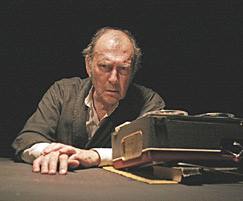
Harold Pinter died on Christmas Eve. When the news was released on Christmas Day, poters on the BBC's Have Your Say site rushed to condemn him, as though there were a peculiar merit in being first to condemn a man after he has died.

I don't understand that attitude. When icons of the right - even dictators - die, I try not to rejoice. I may sometimes feel relieved that people are free from fear as a result but there's something disgusting in publicly rejoicing at a fellow-human's death. Those who have suffered abuse or worse may be allowed their celebrations but these come from so twisted a world and so bad an experience that we should offer sympathy and understanding rather than trying to outdo them in shrieking hurrahs.

Many people disliked Pinter. He wasn't afraid of controversy and, like all of us, was imperfect. But he was willing to speak for those in need of help and for those who were threatened by state power. I wouldn't always agree with him but I admired his willingness to be engaged and to speak out, when silence would have been easier. I wonder how much his sympathy with oppressed people grew out of his experience as a Jewish tailor's son at school in the East End of London. He must have been fourteen or fifteen when the newsreel film of Belsen was shown in cinemas. Yet he became a conscientious objector in the late 1940s and, more recently, associated himself with Jewish campaigners who called for justice for Palestinians as well as Jews in Israel. These weren't popular or easy positions to hold.
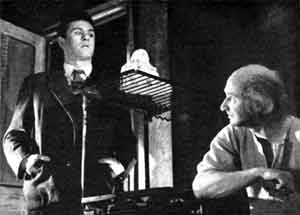
Many of the swift attacks on Pinter target his work as a playwright, calling him "talentless," "shallow" and, of course, "intellectual." There's a laziness in most of the criticism. As a playwright, Pinter continually experimented and took risks. He also, in his early plays, wrote about working-class people - not nice, cosy, working-class people but people who were complex, hopeful, dangerous, often at odds with their society and one another. I'm no expert on Pinter's plays but they make me think - and that's high praise.

As a writer, Pinter cared about language and its relation to truth. The lecture he gave after receiving the Nobel prize for literature has, as its title, "Art, Truth and Politics." it was deeply concerned with two subjects: the way in which language can be abused to conceal the truth and the way in which government and the media prevent us from knowing the acts of horror which are committed on our behalf. Pinter's speech, famously, attacked the United States' role in supporting military dictatorships, and the way in which the United States' conduct is widely ignored. With corruscating irony, Pinter said:

"
It never happened. Nothing ever happened. Even while it was happening it wasn't happening. It didn't matter. It was of no interest."

And that's true of so many horrors, from bombing civilians to starvation and the destruction of the planet. It's easier not to know. It's certainly easier not to think about the grief, the corpses, the injuries, the sheer mess of wars and bombings conducted on our behalf. Again in his Nobel lecture, Pinter quoted Neruda (writing of Republican Spain):

"
Come and see the blood in the streets.
Come and see
the blood in the streets.
Come and see the blood
in the streets!"

Harold Pinter insisted that we see the reality, sure that if enough people saw what was really happening elsewhere, their common humanity and decency would ensure a gentler and more generous outcome.

Pinter's death came only four days after the death of another campaigning writer, the poet Adrian Mitchell. He too was concerned that people see and acknowledge the truth. His most famous poem, "To whom it may concern," was written about Vietnam but many of its words can be applied to all sorts of uncomfortable truths that we would prefer not to know. The economy is built on debt and injustice. We have prospered because other people starve. Our government sends its servants to lie, torture, maim and kill. Children born in this country are locked away because their parents are asylum-seekers. Even in Britain - even in peaceful suburbs - our fellow humans sleep in doorways and on pavements and don't have enough to eat. Lies are more comfortable. We can live in our cosy world where "Nothing ever happened" and choose the newspaper that tells us our lies of choice.


Labels: , , , , , , , , , , , , , ,

Tuesday, December 09, 2008

"Bliss was it in that dawn"


posted by k

John Milton was born 400 years ago today. In his pamphlet, Areopagitica, after which this blog is named, he argued for the free exchange of ideas and knowledge. There were limits to his ideas of freedom of the press but he sketched out, in ringing tones, his belief that liberty and progress were dependent on the search for knowledge, truth and understanding.

Milton's ideas came out of that anxious and hopeful period in English history when parliament was at war with the king. He wrote this pamphlet three years before the Putney Debates in which, for the first time, the idea of one man one vote was advanced, and five years before the execution of Charles I and the establishment of the English Commonwealth. It was a period of immense danger, of grief and the separation of families. It was also a time when individuals questioned authority and took responsibility for debating the future of the country.

Areopagitica shows the excitement of debate at the time, when so many people were willing to look outwards and think questioningly about the world, risking their own safety to enter in a debate about the government of their country. Key questions hinged on liberty and what we would now call "human rights":

"Behold now this vast City: a City of refuge, the mansion house of liberty, encompast and surrounded with his protection; the shop of warre hath not there more anvils and hammers waking, to fashion out the plates and instruments of armed Justice in defence of beleaguer'd Truth, then there be pens and heads there, sitting by their studious lamps, musing, searching, revolving new notions and ideas wherewith to present, as with their homage and their fealty the approaching Reformation: others as fast reading, trying all things, assenting to the force of reason and convincement. What could a man require more from a Nation so pliant and so prone to seek after knowledge. What wants there to such a towardly and pregnant soile, but wise and faithfull labourers, to make a knowing people, a Nation of Prophets, of Sages, and of Worthies. We reck'n more then five months yet to harvest; there need not be five weeks, had we but eyes to lift up, the fields are white already. Where there is much desire to learn, there of necessity will be much arguing, much writing, many opinions; for opinion in good men is but knowledge in the making."

Milton lost and the cause he loved - the Commonwealth - faded. After eleven years, Charles II was invited back by parliament. The leaders of the Commonwealth were hanged, drawn and quartered for their part in the execution of the king. Milton was lucky to survive.

But the ideas of Milton and his contemporaries lived on. In the nineteenth century, working-class radicals were among the most enthusiastic readers of Milton. Thomas Cooper, the self-taught Leicester Chartist, set out to learn the whole of Paradise Lost by heart before he was twenty. He managed only the first three books but Milton's ideas - and other ideas of the 1640s - influenced his writings and popular public lectures.

Milton was in the mainstream too. When English literature became part of formal education in the 19th century, Milton was taught as one of England's great authors. He turned up in classrooms and on the curriculum for A-level English. I remember being shocked when, in 1988, Conservative Education Secretary Kenneth Baker pioneered a National Curriculum in English - and left John Milton out. The mid-17th century was represented instead by a smattering of minor poetry. The great English-language epic - not to mention the plays and essays - was omitted.

Tony Blair's government didn't reinstate Milton. They were more concerned with the appearance of improvement than offering teenagers challenge and excitement. I don't suppose Milton's willingness to question authority suited either Conservative or New Labour governments. I haven't noticed much teaching about the 17th century in school history lessons. It's certainly possible to leave school without knowing that England was ever a republic. I suspect it's possible to leave university with a degree in English without reading a word of Milton. It's certainly rare for students to read the pamphlets.

Reading Milton was my introduction to Britain's radical past. I read most of Milton for pleasure - I loved the exhilaration of his language as well as his engagement with the ideas of his time. It didn't matter that some was difficult. I took what I could from a first reading and returned later, for more. Milton may have slipped from the public consciousness but I don't think he'll be forgotten for ever.

Happy 400th birthday, John Milton - and thank you.


Labels: , , , , , , , ,

Sunday, July 08, 2007

"true allegiance"


posted by k

As a Brit, I find it slightly disturbing that children in the United States are expected to pledge allegiance to a gaudy piece of cloth. The pledge began with good intentions (the first version was written by a Christian Socialist). However, the idea of equality was omitted - apparently the text could only be agreed by making concessions to misogynists and racists.

The United States came into being with the Declaration of Independence, setting out the grounds on which a colony had the right to initiate revolution against a tyrannical ruler. It's still worth reading.

British subjects (Britain does not have citizens) can vote for qualified candidates for parliament. But MPs who don't believe in monarchy can't take their seats unless they're prepared to lie. Even the most moderate republican - someone who would do no more than vote for a republic if given the chance - is banned from taking a seat in parliament. Electors are allowed to vote for an honest republican but, should they do so, they will not be represented in parliament.

All new Members of Parliament and Members of the House of Lords are compelled to swear an oath of allegiance to the queen and her heirs.

A country which bars electors from choosing the representatives of their choice is not a democracy.

Gordon Brown has started a debate about constitutional reform.

The country may not be ready to become a republic. It may not be ready to debate the choice between a monarchy and a republic. But surely it's time to allow honest republicans to take their seats in the House of Commons.

There's a new petition on the Downing Street website. The text is simple and straightforward:

We the undersigned petition the Prime Minister to ensure that the Oath taken by Peers and MPs no longer pledges loyalty to the Monarchy.


You can sign the petition by clicking HERE.


Labels: , , , , , , , , , , , , , , , ,

Friday, March 16, 2007

"I confess!"

posted by k

When church services were in Latin, confession would begin with the word "confiteor". That's usually translated as "I confess" but it's a passive verb, suggesting something more like "I have been confessed."

Mohammed Sheikh Khalid has been confessed. You can read his confession in the transcript of his trial, though it's a pdf file so be careful opening it.

He's been confessed to all sorts of terrorist conspiracies: not just 9/11 but more terrorist plots than I can recall, all over the world, including planned acts that never happened such as the assassination of every U.S. president from Carter onwards and blowing up numerous bridges, power stations and tall towers. The trial transcript has omissions but subsequent reports have assured us there were other confessions too: apparently he killed Daniel Pearl with his own hands.

It's just too much. I don't believe anyone - even Professor Moriarty - could have done as much. I suspect that if he'd been asked who stole a cake from a tea shop in Chipping Campden last Thursday week he'd have confessed to that too.

He wasn't under oath, by the way.

Comments pages have plenty of people saying, "he confessed - you must believe it." He said he'd been tortured too. Do they want me to believe that?

I think he probably was tortured. I think he may have committed some of the crimes to which he confessed. But how can I know? There was no fair, public trial and no proper assessment of the evidence. Mohammed Sheikh Khalid didn't get to choose his own lawyer and the trial transcript shows that his English is imperfect.

Evidence gained through torture and confessions from people who have been confined and tortured over a long period are not reliable. The Moscow show-trials and the Reichstag fire trial had more claim to public justice. Even the McCarthy hearings were public and filmed. What happened to justice?

A post on Craig Murray's excellent blog explores this further and with more authority. I recommend you read it - and bookmark his blog!

Labels: , , , , ,

Wednesday, February 28, 2007

"the Golden Journey to Samarkand"


posted by k


"O turn your eyes to where your children stand.
Is not Baghdad the beautiful? Oh stay.

"We make the Golden Journey to Samarkand.

[...]

"We travel not for trafficking alone:
By hotter winds our fiery hearts are fanned;
For lust of knowing what should not be known
We make the Golden Journey to Samarkand."

It's many years since I read James Elroy Flecker's strange play, Hassan. As I recall, it's a confection of orientalism, sado-masochism and fascination with absolute power. The doom of the main characters is romanticised and torture is treated erotically. The effect was doubtless heightened in the original 1923 production (after Flecker's death) when music by Frederick Delius was added. At the end, the audience is drawn away from the tragedy by the arrival of a band of pilgrims whose song includes the repeated line, "We make the golden journey to Samarkand."

Today no-one would escape from a world of torture and state cruelty to Samarkand. Samarkand is in Uzbekhistan and Craig Murray, who was the British ambassador there, has chronicled some of the horrors of Karimov's totalitarian regime. And there's nothing erotic or glamorous about it. Imagine a country in which the state compels children to work a 12-hour day picking cotton - or in which cotton workers are effectively enslaved for life. Imagine a country in which 1 in 6 people are employed by the security services, or in which the mildest grumble about the government can lead to imprisonment or death. Imagine a country in which dissidence can end in being boiled alive or in which confessions are extracted by the torture of children in front of their parents.

Now imagine you live in a country which expects its paid servants to turn a blind eye to such torture; which describes "confessions" gained in such a way not as true but as "operationally useful"; which treats the upholders of this regime as noble allies in the War against Terror. If you live in Britain or the United States, you don't need to imagine - you already live in such a country.

We live in a country whose government lies and lies again. We are expected to believe that 1 in every 200 male muslims is an active terrorist. Of course it's not true. But the government wants to persuade us to surrender our liberties. This is what John Reid said on a recent webchat:

"The truth is that all of our liberties are under threat from extremist terrorists who have a contempt for the liberties that we value so much. Therefore, we need to protect them and in a civilised society people accept that requires some curtailment on our own liberties. For instance, while everyone agrees on the desirablility of freedom of speech, most people agree that it has to be curtailed when it comes to racist remarks or encouraging hatred against others. It is that balance which is always difficult to achieve, but I am proud that in this country we are amongst the most libertarian in the world, though we are under one of the greatest threats from terrorism."

It's rubbish. You can't protect liberties by getting rid of them. And in Britain we are not "under one of the greatest threats from terrorism". Just compare daily life here with life in Baghdad.

Of course, terrorists exist. Terrorists may even get us. But it's unlikely. Our government isn't anything like as bad as the government in Uzbekhistan. But condoning the torture of other people in a distant country indicates a rottenness which will touch us too. I'm no longer so sure than it can't happen here. I've seen people slip quietly from firm ethics to acceptance of horrors. We have taken our first steps on "the golden road to Samarkand."


For the full John Reid webchat with comments, click here.


And for further details of Craig Murray and his book, Murder in Samarkand (now available in paperback), click here.


Labels: , , , , , ,