Thursday, December 25, 2008

"Nothing ever happened."

posted by k

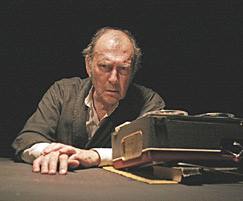
Harold Pinter died on Christmas Eve. When the news was released on Christmas Day, poters on the BBC's Have Your Say site rushed to condemn him, as though there were a peculiar merit in being first to condemn a man after he has died.

I don't understand that attitude. When icons of the right - even dictators - die, I try not to rejoice. I may sometimes feel relieved that people are free from fear as a result but there's something disgusting in publicly rejoicing at a fellow-human's death. Those who have suffered abuse or worse may be allowed their celebrations but these come from so twisted a world and so bad an experience that we should offer sympathy and understanding rather than trying to outdo them in shrieking hurrahs.

Many people disliked Pinter. He wasn't afraid of controversy and, like all of us, was imperfect. But he was willing to speak for those in need of help and for those who were threatened by state power. I wouldn't always agree with him but I admired his willingness to be engaged and to speak out, when silence would have been easier. I wonder how much his sympathy with oppressed people grew out of his experience as a Jewish tailor's son at school in the East End of London. He must have been fourteen or fifteen when the newsreel film of Belsen was shown in cinemas. Yet he became a conscientious objector in the late 1940s and, more recently, associated himself with Jewish campaigners who called for justice for Palestinians as well as Jews in Israel. These weren't popular or easy positions to hold.
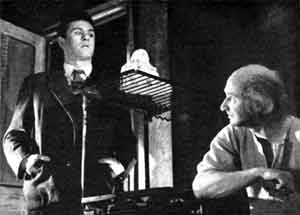
Many of the swift attacks on Pinter target his work as a playwright, calling him "talentless," "shallow" and, of course, "intellectual." There's a laziness in most of the criticism. As a playwright, Pinter continually experimented and took risks. He also, in his early plays, wrote about working-class people - not nice, cosy, working-class people but people who were complex, hopeful, dangerous, often at odds with their society and one another. I'm no expert on Pinter's plays but they make me think - and that's high praise.

As a writer, Pinter cared about language and its relation to truth. The lecture he gave after receiving the Nobel prize for literature has, as its title, "Art, Truth and Politics." it was deeply concerned with two subjects: the way in which language can be abused to conceal the truth and the way in which government and the media prevent us from knowing the acts of horror which are committed on our behalf. Pinter's speech, famously, attacked the United States' role in supporting military dictatorships, and the way in which the United States' conduct is widely ignored. With corruscating irony, Pinter said:

"
It never happened. Nothing ever happened. Even while it was happening it wasn't happening. It didn't matter. It was of no interest."

And that's true of so many horrors, from bombing civilians to starvation and the destruction of the planet. It's easier not to know. It's certainly easier not to think about the grief, the corpses, the injuries, the sheer mess of wars and bombings conducted on our behalf. Again in his Nobel lecture, Pinter quoted Neruda (writing of Republican Spain):

"
Come and see the blood in the streets.
Come and see
the blood in the streets.
Come and see the blood
in the streets!"

Harold Pinter insisted that we see the reality, sure that if enough people saw what was really happening elsewhere, their common humanity and decency would ensure a gentler and more generous outcome.

Pinter's death came only four days after the death of another campaigning writer, the poet Adrian Mitchell. He too was concerned that people see and acknowledge the truth. His most famous poem, "To whom it may concern," was written about Vietnam but many of its words can be applied to all sorts of uncomfortable truths that we would prefer not to know. The economy is built on debt and injustice. We have prospered because other people starve. Our government sends its servants to lie, torture, maim and kill. Children born in this country are locked away because their parents are asylum-seekers. Even in Britain - even in peaceful suburbs - our fellow humans sleep in doorways and on pavements and don't have enough to eat. Lies are more comfortable. We can live in our cosy world where "Nothing ever happened" and choose the newspaper that tells us our lies of choice.


Labels: , , , , , , , , , , , , , ,

Monday, May 05, 2008

"The sword, the mace, the crown imperial"


posted by k

When I was quite young, I was fascinated by the cast gallery in the Victoria and Albert Museum. This was partly because of the stern notice on the door, forbidding children under 15 from unaccompanied entry. I assumed - and still think - this was because of the fragility of the exhibits though it may have been because of the cast of Michaelangelo's David. I was too young to find his nudity particularly interesting or surprising. There were plenty of nudes in the National Gallery and British Museum and, for that matter, on public statues. But although I gazed in fascination at other works - Donnatello's little David and the massive cartoon-stories on Trajan's Column, it was Michaelangelo's David I liked to see. I visited the museums with my younger brother and would lurk outside the cast gallery, looking for a friendly-seeming grown-up who would act as my escort. Nowadays the whole idea would fill parents and social workers with anxiety, but my younger brother and I came to no harm. After all, at eight or nine I was old enough to be sensible and independent on a day out.

It was David's expression that fascinated me. Was he confident or was he afraid? I could never decide from the smooth, white, imitation marble. I still didn't know years later, when I saw the original sculpture and outdoor, in Florence.

I didn't know what David was meant to signify: the idea that he signified anything beyond his own story would have seemed strange to me. Now I learn that he stood for Florence itself and that the huge figure represented small, vulnerable Florence as an embattled city state. David seems to have retained that meaning through the centuries as various rulers and governments have co-opted him. Even the wealthy and powerful like to think of themselves as vulnerable defenders of peace and liberty.

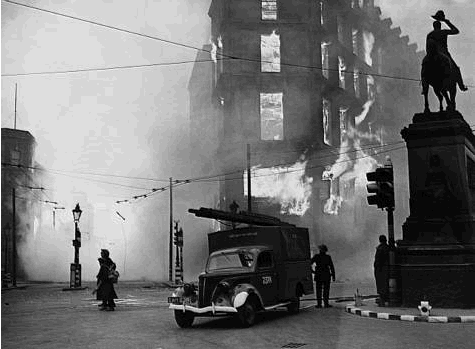
I grew up with different myths of vulnerability. Like most myths, they were founded on a truth. What happened to Britain in the Blitz was terrifying (so was the bombing of Dresden and Nagasaki) and the courage of Londoners and others was rightly praised. I heard enough of air-raids and fires from my parents to know that it had been very bad indeed. Living through bombing, coping with daily news of death and injury and simply carrying on took immense courage - a courage that became a way of daily life.

From tales of the Blitz, from the story of Dunkirk, I learnt a myth of Britain: plucky little Britain, defender of liberty and democracy, standing alone against the fascist foe. This was merged with later knowledge to suggest that Britain fought Germany because of Nazi treatment of the Jews and other oppressed groups (gypsies, homosexuals, communists, dissidents, etc.). That wasn't so, although many individuals joined up because of the known evils of Nazism. Britain fought because Germany invaded Poland and because Britain itself was threatened. The treatment of minorities was seen as a domestic matter. There was considerable anti-semitism in Britain, even during wartime, and the opposition to Jewish immigration in particular prefigures current prejudice against asylum seekers who flee to Britain from torture and death.

Suffering did not make Britain a better, more tolerant place. It didn't prevent Britain from pursuing brutal imperialist policies elsewhere. The myth of small, suffering Britain enabled people - including me - to look away from the truth. I didn't notice what was happening in the Chagos Islands. I've only recently realised that the barbarous mistreatment of the islanders - which continues as our current Labour government refuses to obey court judgments and let the islanders return - was part of a well-established imperial agenda.

We in Britain are so used to the idea of our country as a guardian of freedom that this reads like mad extremism. But what else can I call it, when I read the words of the chief of the Imperial General Staff, Field Marshal Sir John Harding, in 1955? He had been sent to ensure Cyprus continued as a useful British base; his mission was to prevent independence at all costs so that Cyprus could remain as a useful base for operations in the Middle East. Sir John Harding wrote to the British cabinet that, if Cypriot self-determination were to be prevented, "a regime of military government must be established and the country run indefinitely as a police state." The British cabinet accepted Sir John Harding's advice. Ministers were happy to run police states elsewhere if they contributed to Britain's safety or economic advantage. That is what imperialism means.

It's one of many passages that struck me in a long, informative article by Perry Anderson on the recent history of Cyprus in the London Review of Books. I hadn't known much about the history of Cyprus before. When I was at school, the British press treated Archbishop Makarios as a figure of fun but he emerges from the LRB article as a figure of far more integrity than the British cabinet ministers, civil servants and soldiers who opposed him. The British government encouraged and orchestrated brutality for its own interests, regardless of the rights, well-being or lives of its Cypriot subjects. And when things went wrong, Britain's Labour government, under Prime Minister James Callaghan, asked the United States for help - "an instinctive reflex in Labour," Perry Anderson comments.

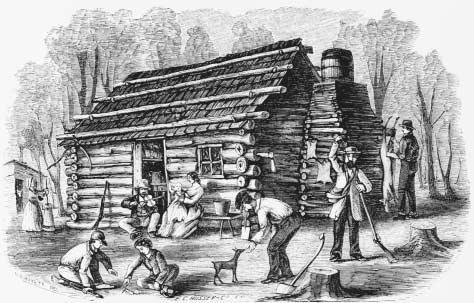
The United States also presents itself as small and vulnerable. The myth of the frontier is still strong and U.S. citizens rightly recall the courage of people who trekked across the country and built communities in the wilderness. But the wilderness wasn't uninhabited. As the new settlers established themselves and finally fought back against the oppression of imperial Britain, they also sought to subdue the original inhabitants of their country. George Washington outlined his strategy in his commands to General John Sullivan in May 1779:

"The Expedition you are appointed to command is to be directed against the hostile tribes of the Six Nations of Indians, with their associates and adherents. The immediate objects are the total destruction and devastation of their settlements, and the capture of as many prisoners of every age and sex as possible. It will be essential to ruin their crops now in the ground and prevent their planting more."

"I would recommend, that some post in the center of the Indian Country, should be occupied with all expedition, with a sufficient quantity of provisions whence parties should be detached to lay waste all the settlements around, with instructions to do it in the most effectual manner, that the country may not be merely overrun, but destroyed."


"But you will not by any means listen to any overture of peace before the total ruinment of their settlements is effected. Our future security will be in their inability to injure us and in the terror with which the severity of the chastisement they receive will inspire them."

Terror was Washington's weapon in the American War of Independence - or the American Revolution as it is sometimes known. The settlers who were becoming a nation thought terror a fair tactic to achieve the just society they envisaged - and that America's original inhabitants were proper victims. Less than three years previously, Washington had signed the Declaration of Independence, which included the words:

"We hold these truths to be self-evident, that all men are created equal, that they are endowed by their Creator with certain unalienable Rights, that among these are Life, Liberty and the pursuit of Happiness. - That to secure these rights, Governments are instituted among Men, deriving their just powers from the consent of the governed, - That whenever any government becomes destructive of these ends, it is the Right of the People to alter or to abolish it, ..."

Today, Britain and the United States continue to use terror to further a modern imperial agenda. But we are constantly told that terror is what other people employ, and we have complex organisations - not fully accountable to democratic government - to defend us from the "terrorist threat". Liberty is curtailed in the United States and in Britain, with popular support.

The myths we hold dear talk of ideals - liberty, democracy, equality - which are still valuable. But unless we unpick the myths and look at historical facts - and our current practices - we'll find it hard to safeguard the values we should hold dear.

Labels: , , , , , , , , , , , , , , , ,

Sunday, July 15, 2007

"the expense of others' freedom"


posted by k

I'm not sure how Chavez will turn out. At this distance, I can't work my way securely through the arguments about him. In John Pilger's film, The War on Democracy, Chavez comes across as a man of immense charm and feeling, but in Latin American politics, this isn't necessarily enough. Whatever his good intentions, the forces ranged against him are strong and it is painfully easy for good intentions to mutate into repression.

Pilger's awkward, angry film makes one case irrefutably: that the United States is an empire which endangers the rest of the world.

That's not a comfortable case to make. United States mythology combines the idea of itself as saviour and defender of the world with the curious sense of America as a victim. But it's not me who makes the case, nor even John Pilger. The case is made most powerfully in Pilger's film by a series of CIA officers, notably Duane Clarridge.
Confronted with the argument that officers of the United States have overthrown governments, torturing and killing the defenders of democracy, Clarridge is vigorous in opposing Pilger's accusations. He insists that the numbers Pilger cites are too high - that there weren't thousands killed in Chile but merely hundreds. The documentation of higher numbers is, he insists, part of a vast conspiracy with Amnesty International at its centre. But if it comes down to it he will, he agrees, sanction any amount of killing, rape and torture where United States interests are threatened.

Against Clarridge and the defenders of United States interests are pitted the poor and the torture victims. Sister Dianna Ortiz, a nun who worked in Guatemala, stands for all that is good in America. She recalls the horrors that provoked her disillusion with her government; in 1989 she was abducted, tortured and gang raped by American-trained torturers, who eventually stopped raping her on the orders of their American boss. As a United States citizen her life was more precious that the lives of Latin American politicians or the poor. From her experience, Dianna Ortiz insists that there is nothing exceptional about Abu Ghraib; she recognized it, from her experience, as the American way of empire.

For the British, there is no comfortable way out. Britain's empire has its own horrors in recent times and events in the 1920s are precursors of My Lai and Falluja. We are assumed to be, as Clarridge says, the beneficiaries of torture. We are responsible.

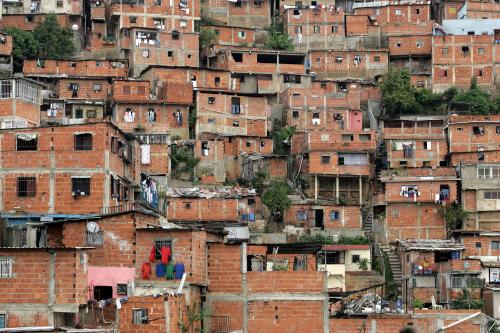
The film raises a further question. What is being defended is not just the interests of the United States but the interests of big companies and the rich. Early contrasts between luxurious mansions and the crumbling barrios set up an opposition between rich and poor which resonates through the film. An impicit question is asked: what happens when the natural resources and infrastructure of a nation are stolen from the nation as a whole and sold to rich people, many of whom live overseas. That is happening here too. Harold Macmillan, conservative peer and former Prime Minister was driven to accuse Margaret Thatcher of "selling off the family silver". That was in the early days of privatisation.

Here too the gap between rich and poor is widening, though it is nothing like as severe as in Latin America, with its dollar-billionaires and starving peasants. Most people will probably go on accepting the idea that things are as they must be, that power should lie with corporations rather than elected government, that democracy is somehow inextricable from the free market. But I don't accept it.

Suppose we protested against the sale of our resources and voted for a radical, nationalising government. Would we end up victims of U.S.-sponsored death squads? Would our singers suffer the fate of Chilean folk singer Victor Jara, whose hands were smashed to silence his guitar? He went on singing. U.S.-sponsored fascists beat him some more. Machine guns turned his flesh into corpse.

His songs and courage survive.


John Pilger's film The War on Democracy is on release in the United Kingdom - only in a few independent cinemas. The film will be distributed in New Zealand and Australia. So far as I can see, it is not being distributed in the United States.

Labels: , , , , , , , , , , , , , , ,

Sunday, July 08, 2007

"true allegiance"


posted by k

As a Brit, I find it slightly disturbing that children in the United States are expected to pledge allegiance to a gaudy piece of cloth. The pledge began with good intentions (the first version was written by a Christian Socialist). However, the idea of equality was omitted - apparently the text could only be agreed by making concessions to misogynists and racists.

The United States came into being with the Declaration of Independence, setting out the grounds on which a colony had the right to initiate revolution against a tyrannical ruler. It's still worth reading.

British subjects (Britain does not have citizens) can vote for qualified candidates for parliament. But MPs who don't believe in monarchy can't take their seats unless they're prepared to lie. Even the most moderate republican - someone who would do no more than vote for a republic if given the chance - is banned from taking a seat in parliament. Electors are allowed to vote for an honest republican but, should they do so, they will not be represented in parliament.

All new Members of Parliament and Members of the House of Lords are compelled to swear an oath of allegiance to the queen and her heirs.

A country which bars electors from choosing the representatives of their choice is not a democracy.

Gordon Brown has started a debate about constitutional reform.

The country may not be ready to become a republic. It may not be ready to debate the choice between a monarchy and a republic. But surely it's time to allow honest republicans to take their seats in the House of Commons.

There's a new petition on the Downing Street website. The text is simple and straightforward:

We the undersigned petition the Prime Minister to ensure that the Oath taken by Peers and MPs no longer pledges loyalty to the Monarchy.


You can sign the petition by clicking HERE.


Labels: , , , , , , , , , , , , , , , ,

Thursday, April 05, 2007

"shameful corridors of time"


posted by k

Forty years ago today, the mainstream media in the United States attacked Dr Martin Luther King for a speech he had given the day before. Time magazine accused him of "demagogic slander". At the Riverside Church in New York, Dr King had called the United States "the greatest purveyor of violence in the world today."

His speech, made in relation to the Vietnam war, called on the U.S. government to reconsider its values and alliances. It included this sentence:

"If we do not act we shall surely be dragged down the long dark and shameful corridors of time reserved for those who possess power without compassion, might without morality, and strength without sight."

More substantial extracts from the speech can be read at Adventus, which also includes links to a full text and an audio version.

Exactly one year after making that speech, Martin Luther King was killed.

(This brief item has been double-posted elsewhere.)

Labels: , , , , ,