"Nothing ever happened."
posted by k
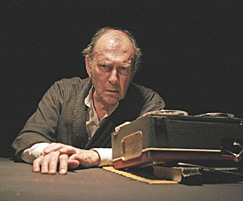
Harold Pinter died on Christmas Eve. When the news was released on Christmas Day, poters on the BBC's Have Your Say site rushed to condemn him, as though there were a peculiar merit in being first to condemn a man after he has died.
I don't understand that attitude. When icons of the right - even dictators - die, I try not to rejoice. I may sometimes feel relieved that people are free from fear as a result but there's something disgusting in publicly rejoicing at a fellow-human's death. Those who have suffered abuse or worse may be allowed their celebrations but these come from so twisted a world and so bad an experience that we should offer sympathy and understanding rather than trying to outdo them in shrieking hurrahs.
Many people disliked Pinter. He wasn't afraid of controversy and, like all of us, was imperfect. But he was willing to speak for those in need of help and for those who were threatened by state power. I wouldn't always agree with him but I admired his willingness to be engaged and to speak out, when silence would have been easier. I wonder how much his sympathy with oppressed people grew out of his experience as a Jewish tailor's son at school in the East End of London. He must have been fourteen or fifteen when the newsreel film of Belsen was shown in cinemas. Yet he became a conscientious objector in the late 1940s and, more recently, associated himself with Jewish campaigners who called for justice for Palestinians as well as Jews in Israel. These weren't popular or easy positions to hold.
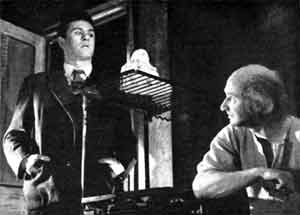 Many of the swift attacks on Pinter target his work as a playwright, calling him "talentless," "shallow" and, of course, "intellectual." There's a laziness in most of the criticism. As a playwright, Pinter continually experimented and took risks. He also, in his early plays, wrote about working-class people - not nice, cosy, working-class people but people who were complex, hopeful, dangerous, often at odds with their society and one another. I'm no expert on Pinter's plays but they make me think - and that's high praise.
As a writer, Pinter cared about language and its relation to truth. The lecture he gave after receiving the Nobel prize for literature has, as its title, "Art, Truth and Politics." it was deeply concerned with two subjects: the way in which language can be abused to conceal the truth and the way in which government and the media prevent us from knowing the acts of horror which are committed on our behalf. Pinter's speech, famously, attacked the United States' role in supporting military dictatorships, and the way in which the United States' conduct is widely ignored. With corruscating irony, Pinter said:
"It never happened. Nothing ever happened. Even while it was happening it wasn't happening. It didn't matter. It was of no interest."
 And that's true of so many horrors, from bombing civilians to starvation and the destruction of the planet. It's easier not to know. It's certainly easier not to think about the grief, the corpses, the injuries, the sheer mess of wars and bombings conducted on our behalf. Again in his Nobel lecture, Pinter quoted Neruda (writing of Republican Spain):
"Come and see the blood in the streets.
Come and see
the blood in the streets.
Come and see the blood
in the streets!"
Harold Pinter insisted that we see the reality, sure that if enough people saw what was really happening elsewhere, their common humanity and decency would ensure a gentler and more generous outcome.
Pinter's death came only four days after the death of another campaigning writer, the poet Adrian Mitchell. He too was concerned that people see and acknowledge the truth. His most famous poem, "To whom it may concern," was written about Vietnam but many of its words can be applied to all sorts of uncomfortable truths that we would prefer not to know. The economy is built on debt and injustice. We have prospered because other people starve. Our government sends its servants to lie, torture, maim and kill. Children born in this country are locked away because their parents are asylum-seekers. Even in Britain - even in peaceful suburbs - our fellow humans sleep in doorways and on pavements and don't have enough to eat. Lies are more comfortable. We can live in our cosy world where "Nothing ever happened" and choose the newspaper that tells us our lies of choice.
Labels: Adrian Mitchell, democracy, government, Harold Pinter, injustice, Iraq, Israel, lies, media, newspapers, oppression, responsibility, truth, United States, war
posted by areopagitica at 8:13 pm
0 comments