Monday, May 03, 2010

"who does the wolf love?"

posted by k

In my brief and ineffectual period of political involvement – back in the 1970s - I learnt some of the rules about elections. I saw how counts were conducted and scrutinised, I discovered that there were limits on party spending in any constituency – and that they started the moment a candidate stopped being called the “prospective party candidate” after his official adoption for the seat, and I learnt the rules on treating.


“Treating” is regarded in electoral law as a form of bribing the electorate. I learnt that the rules were so strict that if I was working in a committee room on election day, I'd have to pay for any coffee and biscuits I consumed, even though the committee room was in the house of a personal friend. If I didn't pay for my mid-morning snack, that could either be regarded as a bribe to vote for the candidate I supported or as payment for my services, in which case it could topple the allowed expenses for the constituency over the permitted maximum.


Things seem to have changed, according to Craig Murray's account of Jack Straw's campaign in Blackburn. Jack Straw, the Secretary of State for Justice, seems happy to invite 700 people for free, sit-down dinners. It sounds like the sort of practice that led to laws against treating. He's been getting away with it for years so, unless the rules have changed, I suppose he's found some way round the law. I wonder what it is.

All politicians offer bribes to voters. The party manifestos are full of them. There are promises to help you if you're poor, rich, old, young, married, officially partnered. There are even bribes for the dead – the Conservative Party's rhetoric talks of a “death tax,” as though people would rather pay more in taxes when still alive. (Nobody seems to have noticed the way the conservatives' proposed marriage allowance deprives the widows and abandoned, whose taxes will rise by £150 a year, as if to punish them for the loss of a partner.)

There's something disturbing about this focus on bribing the electorate. Media stories repeatedly tell voters that it's fine – even praiseworthy – to vote entirely out of self-interest. Self-interest is bound to play a part. I know the world most vividly from my own experience and that is bound to influence my decisions. But there's more to it than that. As citizens in a democracy, we should also be asked to consider the good of the whole. I want to vote for more than “bread and circuses.”

There's nothing indecent in caring for the well-being of others – even people I haven't met. Most people are more generous and unselfish than they realise. If I look around, I see daily acts of kindness and courtesy – cruelty and selfishness are still unusual enough to be shocking. People who can barely afford it give money to charitable appeals. Marathon runners ask for sponsorship – often to help people they don't know – and their friends are happy to sponsor them. People who express hatred or mistrust for a minority group (Muslims, asylum seekers, gay people) rarely live out that hatred in their daily lives but make ever more exceptions for the likeable individuals they encounter.
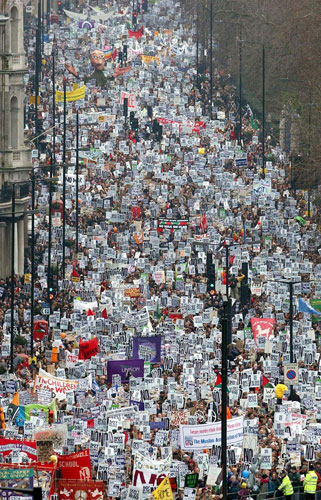

Away from elections, citizens also care about big political questions and international responsibility. At the lowest estimate, 1 in 50 members of the entire British population made their way to one of the big anti-war demonstrations on 15th February, 2003. They were supported by millions more. This wasn't a selfish impulse but a real political concern which the government chose to attack, misrepresent and finally ignore. Huge numbers of people are concerned about poverty overseas and pollution of the environment. Beside the concerns of the people, the scope of the leaders' debates and media reporting seems rather narrow, as though voters are being encouraged to vote only from self-interest.

Even if we were all to vote from self-interest, we don't have the information we need. The three candidates for chancellor agreed in their debate that cuts would be brutal – harsher than under Thatcher – but none of the leaders is prepared to turn to the voters and explain precisely what they plan for us. The Financial Times on 26th April laid out the kind of cuts we might expect; according to their simulator, using government figures, cuts of £30 – 40 billion, which all parties agree we need, would require the following cuts or their equivalent:

" a 5 per cent cut in public sector pay; freezing benefits for a year; means-testing child benefit; abolishing winter fuel payments and free television licences; reducing prison numbers by a quarter; axing the two planned aircraft carriers; withdrawing free bus passes for pensioners; delaying Crossrail for three years; halving roads maintenance; stopping school building; halving the spending on teaching assistants and NHS dentistry; and cutting funding to Scotland and Wales by 10 per cent."

None of the parties is talking about cuts on this scale – and no-one seems to be addressing the knock-on effect such cuts would have. If large groups of people have less money to spend, a large number of businesses will collapse – and that will lead to more unemployment and, presumably, higher spending on benefits. It's a nasty cycle and no-one is talking about how we shall ever get out of it – or whether we need to adjust our way of life.


This election should have been an opportunity to discuss questions of equality and the distribution of wealth. These are vital questions in a democracy. Wealth buys influence – and that may be the strongest political argument for its more equal distribution. There are also important ways in which the poor are not free.

During this election, the media have encouraged us to see the political parties as purveyors of treats and promises. What they offer sounds more alluring than a cup of instant coffee and a biscuit – or even a plate of curry. But the rewards we're offered may prove insubstantial – and they're a pretty poor substitute for a grown-up and thoughtful political debate.

Labels: , , , , , , , , , , , ,

Thursday, December 25, 2008

"Nothing ever happened."


posted by k

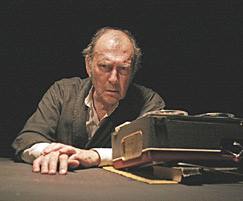
Harold Pinter died on Christmas Eve. When the news was released on Christmas Day, poters on the BBC's Have Your Say site rushed to condemn him, as though there were a peculiar merit in being first to condemn a man after he has died.

I don't understand that attitude. When icons of the right - even dictators - die, I try not to rejoice. I may sometimes feel relieved that people are free from fear as a result but there's something disgusting in publicly rejoicing at a fellow-human's death. Those who have suffered abuse or worse may be allowed their celebrations but these come from so twisted a world and so bad an experience that we should offer sympathy and understanding rather than trying to outdo them in shrieking hurrahs.

Many people disliked Pinter. He wasn't afraid of controversy and, like all of us, was imperfect. But he was willing to speak for those in need of help and for those who were threatened by state power. I wouldn't always agree with him but I admired his willingness to be engaged and to speak out, when silence would have been easier. I wonder how much his sympathy with oppressed people grew out of his experience as a Jewish tailor's son at school in the East End of London. He must have been fourteen or fifteen when the newsreel film of Belsen was shown in cinemas. Yet he became a conscientious objector in the late 1940s and, more recently, associated himself with Jewish campaigners who called for justice for Palestinians as well as Jews in Israel. These weren't popular or easy positions to hold.

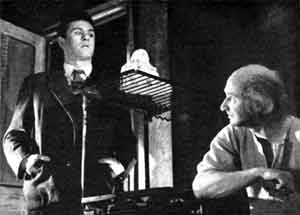
Many of the swift attacks on Pinter target his work as a playwright, calling him "talentless," "shallow" and, of course, "intellectual." There's a laziness in most of the criticism. As a playwright, Pinter continually experimented and took risks. He also, in his early plays, wrote about working-class people - not nice, cosy, working-class people but people who were complex, hopeful, dangerous, often at odds with their society and one another. I'm no expert on Pinter's plays but they make me think - and that's high praise.

As a writer, Pinter cared about language and its relation to truth. The lecture he gave after receiving the Nobel prize for literature has, as its title, "Art, Truth and Politics." it was deeply concerned with two subjects: the way in which language can be abused to conceal the truth and the way in which government and the media prevent us from knowing the acts of horror which are committed on our behalf. Pinter's speech, famously, attacked the United States' role in supporting military dictatorships, and the way in which the United States' conduct is widely ignored. With corruscating irony, Pinter said:

"
It never happened. Nothing ever happened. Even while it was happening it wasn't happening. It didn't matter. It was of no interest."

And that's true of so many horrors, from bombing civilians to starvation and the destruction of the planet. It's easier not to know. It's certainly easier not to think about the grief, the corpses, the injuries, the sheer mess of wars and bombings conducted on our behalf. Again in his Nobel lecture, Pinter quoted Neruda (writing of Republican Spain):

"
Come and see the blood in the streets.
Come and see
the blood in the streets.
Come and see the blood
in the streets!"

Harold Pinter insisted that we see the reality, sure that if enough people saw what was really happening elsewhere, their common humanity and decency would ensure a gentler and more generous outcome.

Pinter's death came only four days after the death of another campaigning writer, the poet Adrian Mitchell. He too was concerned that people see and acknowledge the truth. His most famous poem, "To whom it may concern," was written about Vietnam but many of its words can be applied to all sorts of uncomfortable truths that we would prefer not to know. The economy is built on debt and injustice. We have prospered because other people starve. Our government sends its servants to lie, torture, maim and kill. Children born in this country are locked away because their parents are asylum-seekers. Even in Britain - even in peaceful suburbs - our fellow humans sleep in doorways and on pavements and don't have enough to eat. Lies are more comfortable. We can live in our cosy world where "Nothing ever happened" and choose the newspaper that tells us our lies of choice.


Labels: , , , , , , , , , , , , , ,

Sunday, September 09, 2007

"the unmentionable odor of death"

posted by k

I watched the towers flame and tumble on live television. I had to work out how to tell the children. They were going to hear about this horror from their friends. In the end, I thought they had better see for themselves. Children's imaginations can conjure up something even worse than tiny human figures leaping from windows and tumbling through the air.

Even that afternoon I was hoping that when people saw the horror and the pain and the grief they would decide that this was something they could not inflict on anyone else. This smashing of ordinary lives is what vengeance looks like. But soon we were told we had to support more vengeance and applaud as more lives were smashed, usually out of sight because surgical strikes look more tasteful if shown as blobs of light on computer screens.

A week after 9/11, I stood in silence thinking of the dead. It was a time for sorrowful reflection and should have led to intelligent questioning and deeper thought. But anniversaries of 9/11 were used to confuse loving memories with new hatred. Silence was enforced as "respect for the dead". Memories and grief were dragooned into support for blanket-bombing. Fear was promoted. We were told we were conducting a "war on terror" but our leaders wanted us to be terrified. Our leaders got away with kidnapping and torture as well as killing. I stopped observing the anniversaries.

But on Tuesday there will be a new way of commemorating the anniversary of 9/11. It's the first day of DSEi 2007. DSEi stands for Defence Systems & Equipment International and on 11th September 2007 they will be opening one of the biggest arms fairs in the world, in London's docklands.

If you look at the DSEi website, you can see that it will be quite a jamboree. There will be opportunities for networking as suppliers and buyers meet one another.

United States companies are advised about the need to market in Europe:

"The European Union boasts a defense budget of US$190bn (source: Office of Defense Cooperation) and is focusing on promoting a highly open and competitive environment. The UK market in particular is one of the most open in the world. US companies often lead, or are members of, winning bid teams for UK defense programs.

European nations are also responding to new roles such as homeland security and peacekeeping, creating fresh areas of opportunity for US companies.

As well as conducting international business in English, the European militaries are renowned as prompt and reliable payers reducing the financial risks of dealing in international markets."

It's a cosy club. While United States companies are urged to find "a ready-made point of access to lucrative overseas defense markets", this marketing strategy sits snugly within policies outlined by Britain's Ministry of Defence and endorsed by cabinet ministers. And the DSEi exhibition is marketed as an enjoyable break for exhibitors and delegates. It's international (according to DSEi's website, there were 86 overseas delegations in 2005). There are networking opportunities over lunch, wine and gourmet coffee. There's an Electronic Warfare Pavilion and a Night Vision Technology Forum. There are conferences and workshops. There's a company recommending delegates to arrive in chauffeur-driven Mercedes and an opportunity to soak up London culture in the evening.

Of course, you have to be a genuine arms trader to get in. The admissions policy states firmly:

"Anyone attending DSEi must not take part in any canvassing, leafleting, demonstrations, objectionable behaviour or any activity which may disrupt DSEi."

Demonstrators have got into past exhibitions. The comedian Mark Thomas observed the sale of banned electro-shock equipment in 2005. There was even an electro-shock spray. These have been illegal since 1997 but Mark Thomas found they were still on sale in Birmingham this June. I expect they'll look out for him in London on 9/11.

Perhaps all of the items on sale this year will be legal. It still disgusts me that the British government subsidises an organisation that markets killing. 9/11 seems a particularly inappropriate day on which to open a major arms fair, but I suppose it will give the government a further excuse for a high level of surveillance and heavy-handed policing. Away from the comfortable networking, soldiers will use the weapons and equipment sold at the fair. Planes continue to attack buildings. Buildings still go up in flames. More tiny human figures tumble through the air. Grief and horror continue. This time there's no doubt that we're responsible.

There's just a chance things could change.

DSEi is up for sale. The British government has announced the closure of the Defence Export Services Organisation. This doesn't mean arms fairs will stop. It doesn't even mean that the British tax-payers' subsidy of the arms merchants will end. But the government seems to have realised that promoting war and torture doesn't win votes or improve its image.

On Tuesday 11th September, Campaign Against Arms Trade is organising a peaceful protest against DSEi. Joining the protest, or supporting CAAT's campaigns, might be a good way of commemorating the dead of 9/11. Some may even wish to remember that earlier 9/11 - the day in 1973 when the legal government of Chile was overthrown by a military coup. It was replaced by a fascist dictatorship employing torture and murder as weapons of control. The 1973 coup was made easier because the army had Hawker Hunter jets which bombed the presidential palace. The planes were made in Britain.


Labels: , , , , , , , , , , , , , ,

Monday, September 03, 2007

"the war itself had causes"

posted by k

In Tom Stoppard's play, Travesties, set in Zurich in 1917, the diplomat-protagonist Henry Carr reflects on the causes of the First World War: "I forget what they were, but it was all in the papers at the time. Something about brave little Belgium, wasn't it?
" Later he wonders if the cause wasn't "saucy little Serbia." The key point is not the truth but effective headlines. As he puts it, "The newspapers would never have risked calling the British public to arms without a proper regard for succinct alliteration."

We forget the causes of war. So many countries, so many names - such difficult sets of belief and complicated histories. Even important politicians can't keep track of which is which. It's much easier to latch on to what the papers say - to news that is often fed to journalists by government sources.

When Tony Blair spoke about the war in Iraq, which he linked with the so-called "war on terror", he used to go back to 9/11 as the day on which everything changed. He described the war as "an eopchal struggle between the forces of progress and the forces of reaction" set in motion by a "poisonous ideology" which had "chosen Iraq as its battleground." (I thought Iraq was chosen by Bush and Blair - but that doesn't fit the myth.)

One odd thing about this war is the way in which the sides change. One week we have one enemy, then another. Sometimes we're fighting Shi-ite extremists, sometimes Sunni extremists, sometimes both together.

Our allies are a funny lot too. So many people are keen to be against Terror. Russia is a keen ally. Sarkozy seems to be bringing France into the "War on Terror" camp. President Karimov of Uzbekistan was free to torture and murder dissidents and their families, so long as he spouted the "War on Terror" line. Libya was against us. Now Libya is our ally. Today, North Korea announced that it is to be removed from the U.S. list of rogue states. How long our leaders describe Kim Jong-Il as a democrat and friend of freedom?

Rogue states are defined by the White House as states that:

  • brutalize their own people and squander their national resources for the personal gain of the rulers;
  • display no regard for international law, threaten their neighbors, and callously violate international treaties to which they are party;
  • are determined to acquire weapons of mass destruction, along with other advanced military technology, to be used as threats or offensively to achieve the aggressive designs of these regimes;
  • sponsor terrorism around the globe; and
  • reject basic human values and hate the United States and everything for which it stands.
It's worth testing Britain, the United States and all their allies against these standards. I've noticed quite a few countries developing weapons of mass destruction, disregarding international law and using threats to achieve their designs. I've noticed quite a few people in public life getting rich from defence contracts. Does that squander national resources for personal gain - at the cost of human lives? Or aren't we supposed to consider ourselves? Perhaps ethics are just for other people. Or perhaps ethical standards change as fast as our history is rewritten.

At the end of 2001 the four main rogue states were listed as Iran, Iraq, Libya and North Korea. Now there's only one left - and the hawks are circling.


Labels: , , , , , , , , , ,

Friday, August 31, 2007

"honour's a name"

posted by k


When I was growing up - even in the 1960s - the British Empire was treated as a source of pride. We were the good rulers, bringing decent values and proper order to a savage world. Atrocities were barbaric. They were what the other side did - never the British.

In comics and books, imperial rule was mapped onto a mythical class system in which grateful servants and peasants tugged forelocks and lived vicariously through master and mistress. At the end of their lives, they would be looked after.
There were almshouses for peasants, a tiny flat for nanny and ... something or other for colonial soldiers who fought abroad and imposed order on their fellow subjects in other lands coloured pink on the map.

Gradually the tales of atrocity emerge. The latest evidence tells of Indian soldiers used in experiments. They weren't killed - at least, not instantly - but they were sent into gas chambers to be burnt with mustard gas.

It wasn't just the Indian soldiers who were used. Between 1916 and 1989 20,000 soldiers of the Empire (most British-born) were subjected to trials of chemical weapons. In the 1930s there was an attempt to discover whether mustard gas caused more damage on Indian or British skin. The tests were continued through the Second World War. In 1942, a British scientist reported on the frequency of severe burns:

"
Severely burned patients are often very miserable and depressed and in considerable discomfort, which must be experienced to be properly realised."

Had this happened in Germany, our soldiers and scientists would have been put on trial. But no-one prosecuted the victors.


We had our torture chambers too. After the Second World war, as the Nurmberg trials proceeded, British soldiers systematically tortured Germans suspected of Nazism or Communism. Some were starved to death. Our soldiers took photographs to chart what they had done.

During and after World War 2, in breach of international law, prisoners of war were kept in a dungeon in Kensington known as "the London cage". For most of this time, the cage was kept secret from the Red Cross. The Red Cross would have complained because the cage was used for torture. At first, torture was just for soldiers - members of the SS. Later civilians were captured and brought to join the soldiers. The Red Cross didn't have to be informed because civilians, it could be argued, fell outside the rules of war.

In today's tangled world, in which we're supposed to be bringing freedom and democracy to other nations, we routinely neglect those who work for us. The soldiers from the old empire who still fight for us, retire to neglect and disdain. Campaigns may help the interpreters who work with British troops and whose death receive little attention in the British press.

It's so tempting to speak of our responsibility to the people of Iraq - for we really are responsible. But with our history, what moral authority can we claim? Why should anyone trust Britain?


Labels: , , , , , ,

Friday, June 01, 2007

"Voices of play and pleasure"


posted by k

There were children playing in the fountains. It was a hot, half-term day. And the recruiters were in town.

We're having a panic about paedophiles at the moment: people who take children away and hurt them. Yet no-one seemed worried by the smiling men and women in uniform, luring the children with shiny toys and promises of adventure. Even small children went forward, encouraged by their parents if they seemed shy. They wanted to share the adventure.

It was all about half-term fun. The Royal Air Force was offering more than most parents can afford and children queued - alone or with their parents - so that they could clamber over the fancy toys.


There were guns too.

In 1996, almost all handguns were banned in the United Kingdom. So some really big guns were a rare treat. Small children gazed and took turns to handle them. They were shown how to hold them in the correct position and look through the sights at a target.

The biggest treat of all was the shiny red aircraft. Grown-ups and children queued to climb into the cockpit and hear all about it.


Article 38 of the 1989 United Nations Convention on the Rights of the Child says that no country should recruit children under 15 years of age into its armed forces. In 2000 an optional protocol was drawn up to discourage recruitment of young people under 18. Young people under 18 are not supposed to take part in armed conflict. (So far fifteen 17-year-olds have served in Iraq with the British Army.)

Army recruiters are busy in schools
- especially schools in poor areas. Teachers are annoyed - especially since primary schools are included in recuitment visits. Parents are allowed to remove their children from religious education classes, acts of worship and sex education. My children's schools have never warned parents in advance that the army is sending recruiters with a day of activities or a recruitment talk.


Organisations like the Air Cadets take children from the age of 13, involve them in exciting activities (flying, target shooting, life saving ...) and groom them for a life in the army.

Children - some still in pushchairs - enjoyed the display in the square. There were stalls promoting all sorts of aspects of life in the air force. There were placards, banners, leaflets, stickers - all about fun, careers, friendship, training and pay. None of them mentioned killing. None of them mentioned being killed.


Labels: , , , , , , ,

Thursday, May 24, 2007

"our far-flung battle-line"


posted by k (copied from a blog elsewhere)

Gordon Brown thinks the British Empire was a good thing. More than two years ago, he visited East Africa and called for a celebration of empire: for its ideas of freedom, tolerance and civic duty.

Some of the outposts of empire were the most beautiful parts of the world. In 1815, after Napoleon's defeat, the British took control of the little island of Diego Garcia in the Indian Ocean.

It's the largest of the Chagos Islands - a small string of coral atolls with white sandy beaches. Twenty years later, slavery was abolished on the islands. Diego Garcia flourished: as a mixed race community it developed its own variety of French Creole. There were villages, a hospital, a church, a school, the means of livelihood by fishing and selling copra. By the early 1960s, there were plans for tourism.

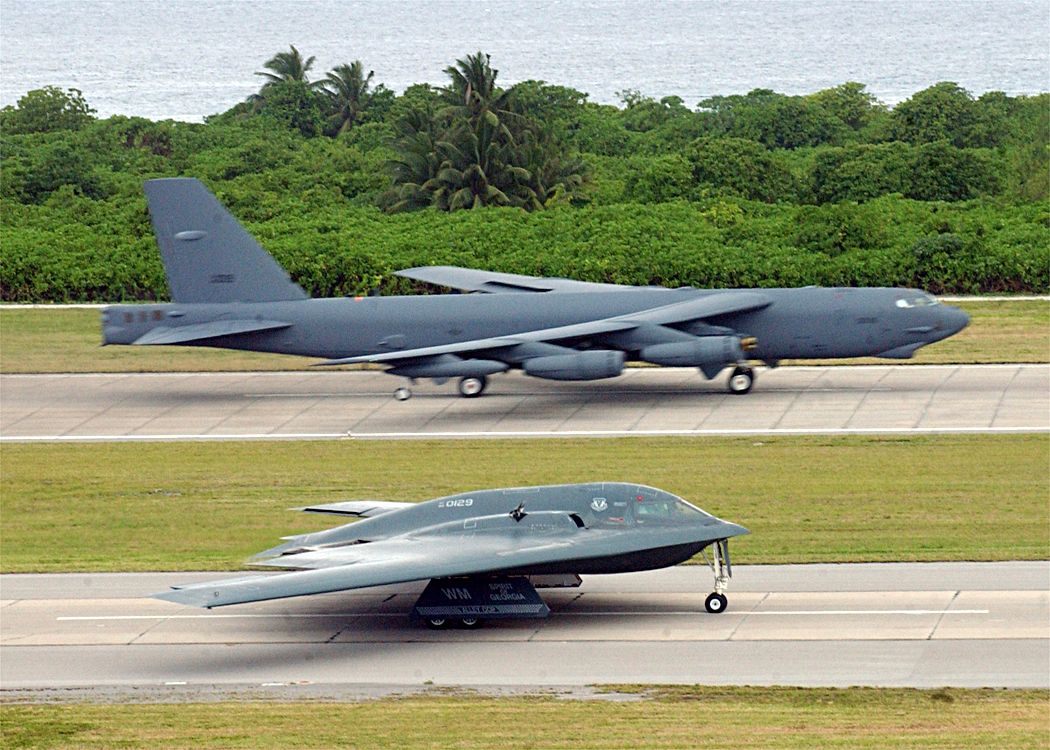
Between 1964 and 1966, the Chagos islands were stolen from the islanders. The British government pretended they were uninhabited and leased them to the Pentagon. The United States military wanted a base in the area. With their usual attention to the meaning of words, they set up a camp there and called it "Camp Justice." In theory, it still comes under British law - or the law of the British Indian Ocean Territories.

You might expect British law to protect the islanders. But as the British government pretended the islanders didn't exist, they had to depopulate the islands. First the islanders were told to leave. But they didn't want to go. So the food ships were stopped. Men, women and children went hungry. It didn't work. The islanders wanted to stay in their homes. After that the British authorities had a better idea. They decided to scare the people by killing their dogs. The dogs were poisoned, beaten, gassed and even burnt alive - in front of the islanders. Children watched grown men torture their pets to death. That is what empire means.

At last the islanders boarded the boats that would take them from their homes. They were dumped on Mauritius in poverty. After some years (and some deaths) the islanders were offered a little compensation for the loss of their homes and way of life.

Labour and Conservative governments have systematically lied and tried to cover up the truth. They couldn't come to Britain to make their case. None of the islanders were allowed to live in Britain as citizens until a court ruling in the year 2000.

Ever since they were deported, the islanders have been trying to get back home. In the year 2000, the British courts also ruled that the islanders could return to the Chagos Islands, with the exception of Diego Garcia. Robin Cook, who was Foreign Secretary, said the government wouldn't fight the decision. But in 2004, after Robin Cook had resigned, the government used the royal prerogative to overturn the decision of the courts.

The islanders went back to court. Both the High Court and, today, the Court of Appeal have ruled that the government went beyond its powers and that the islanders should be allowed to return. But Margaret Beckett as Foreign Secretary won't let it go at that. She's appealing to the House of Lords.

After all, Diego Garcia was one of the bases for bombing Iraq and Afghanistan. Empire puts the interests of the ruling nation at war above the peaceable interests of colonised people.

The campaign of the Chagos Islanders goes on. So does the Empire. Freedom? Tolerance? Civil duty? ... Starving children. Killing dogs. Lying. Mr Brown, this was and is your government. What were you talking about?


Labels: , , , , , , , , , ,

Sunday, April 08, 2007

"the history of barbarism"

posted by k

Suppose we told the other side of the story. It would go something like this.

"We watched them interfere with shipping. This concerned us. Their leaders were issuing threats. Troop numbers are high in the region. Warships are massing in what they term "military exercises".

"We were careful to avoid casualties. We let them see they were outnumbered and that we were well-armed. No-one was hurt and we took them into custody. Naturally we took away their arms. At first we restrained them. We didn't want anyone to be hurt.

"We had to take precautions to safeguard military secrets. This is normal. We gave the prisoners blindfolds and let them put them on. Our soldiers were armed of course. Soldiers are accustomed to bear arms.

"As is normal, we segregate the sexes in custody. Interrogation followed normal techniques - nothing violent or humiliating . (We are not barbarians.) We interviewed prisoners separately and tried to get at the truth. We cautioned them and pointed out the risk of trial and imprisonment. We are sorry if sometimes guards moved the prisoners a little roughly; it is hard when they do not speak the same language though we tried to have an interpreter ready at all time.

"The prisoners were treated with respect. They were provided with fresh clothing and bedding. They had separate cells. Food and drink were provided. There were blankets to ensure that they were warm. After a few days we improved their conditions. They were allowed to associate with one another.

"When we discovered that the woman was a mother, we allowed her to write home. We invited television cameras to film the prisoners so that their families could see they were well.

"The prisoners confessed. Some of our people called for their trial and execution. We paid no attention to these extremists but showed mercy. Without demanding anything in return, we freed the prisoners and sent them home with gifts.

"Now they complain of their treatment. They may be obeying orders. They are soldiers; they do what their superiors command. They may tell lies for money. But we treated them well. It is your allies who abuse prisoners. We have seen the pictures of Abu Ghraib and we know enough of what happens in Guantanamo.

"Why do you say we are the hostage-takers? Why do you call us the barbarians?"


Seven of the fifteen freed prisoners attended the press conference to condemn their treatment in Iran. They didn't all speak. They had previously thanked President Ahmadinejad and said they were well-treated in Iran.

Now the Ministry of Defence is encouraging the freed prisoners to sell their stories. This sounds like chequebook journalism. Max Clifford sees problems in this. So does Craig Murray. So do I.


Labels: , , , , , , , ,

Thursday, April 05, 2007

"shameful corridors of time"


posted by k

Forty years ago today, the mainstream media in the United States attacked Dr Martin Luther King for a speech he had given the day before. Time magazine accused him of "demagogic slander". At the Riverside Church in New York, Dr King had called the United States "the greatest purveyor of violence in the world today."

His speech, made in relation to the Vietnam war, called on the U.S. government to reconsider its values and alliances. It included this sentence:

"If we do not act we shall surely be dragged down the long dark and shameful corridors of time reserved for those who possess power without compassion, might without morality, and strength without sight."

More substantial extracts from the speech can be read at Adventus, which also includes links to a full text and an audio version.

Exactly one year after making that speech, Martin Luther King was killed.

(This brief item has been double-posted elsewhere.)

Labels: , , , , ,

Monday, February 19, 2007

"how strange the change"


posted by k


Time for a quiz. (Most blogs have them).

There are just three questions and no prizes.


1. Who said this?

"My father fought in the last great European war. I was born in 1953, a child of the Cold War eara, raised amid the constant fear of a conflict with the potential to destroy all of humanity. Whatever other dangers may exist, no such fear exists today. Mine is the first generation able to contemplate the possibility that we may live our entire lives without going to war or sending our children to war. That is a prize beyond value and this agreement is a great contribution to it.

"The drawing of this new European landscape has not been easy, as many in this room know better than I. Stability and prosperity are never assured, they can never be taken for granted, but throughout central and eastern Europe political and economic miracles are being wrought. People raised on suffering and pain sense stability and prosperity can now lie ahead."


2. and who said this?

"
The collapse of the Berlin Wall acted as a catalyst for a reappraisal of the type of Armed Forces that the UK would require to meet the security challenges which emerged to fill the vacuum of a post bipolar world. The peace dividend from the end of the Cold War was announced in the 1990 review "Options for Change", which sought an 18% reduction in manpower.

"Yet already a new strategic reality was upon us: the Iraqi invasion of Kuwait later that year confirmed that there were situations further afield which might require a military resolution. Closer to home the former Yugoslavia disintegrated into civil war and ethnic cleansing.

"This new security context was articulated in the 1998 Strategic Defence Review. It called for expeditionary Armed Forces that were deployable, agile and adaptable."


3. and who said this?

"
There are two types of nations similar to ours today. Those who do war fighting and peacekeeping and those who have, effectively, except in the most exceptional circumstances, retreated to the peacekeeping alone.

"Britain does both. We should stay that way. But how do we gain the consent to do it?"


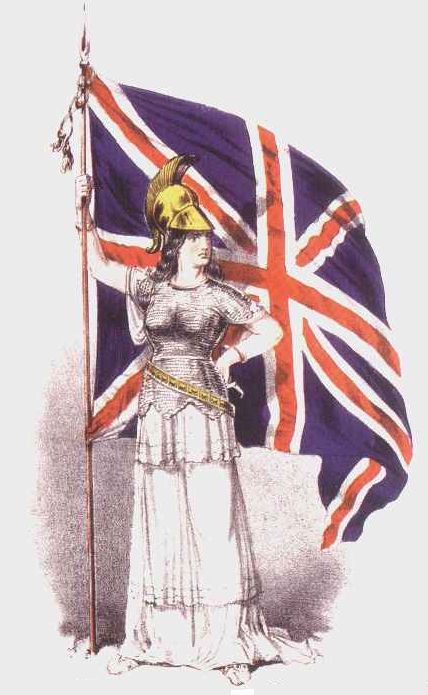
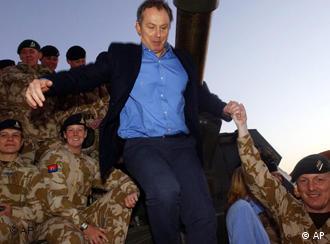
There's a clue in the picture. The last two are from Tony Blair's speech aboard HMS Albion on 12th January, 2007. And the first is from Tony Blair's speech in Paris on 27th May, 1997.

It's strange to contemplate the change from hope to horror. And it's strange to observe so casual and careless an attempt to rewrite history.


Labels: , , , ,