posted by k
Poetry doesn't always translate easily. However, I am posting a complete poem by Yusuf Juma, about the Andijan massacre. The massacre took place on 13 May, 2005 when hundreds of unarmed protesters were killed by Uzbek security services for taking part in a demonstration against the government. Yusuf Juma wrote this poem about the event:
The best men of the people were shot in Andijan.
Elders like Dukchi-ishan, were shot in Andijan.
People were shot in Namangana, shot in Fergana,
the very best lions were shot in Andijan.
The blind are alive, the jackals are alive,
Sharifjan Shokurovs were shot in Andijan.
Future Babarakhin Mashrabs were killed,
tigers like Babur were shot in Andijan.
In their hearts they were wild activists, endurers of the right way,
let their graves be full of light, they were shot in Andijan.
They went off faithful to their faith, they went off with open eyes,
the earth was left without men, they were shot at Andijan.
Yusuf Juma has a history of speaking out and protesting about repression in Uzbekistan. As a result, he is banned from publication in his own country and he and his family have suffered harrasment and arrest. In 2001, he was sentenced the three years in prison for "insulting the president". The sentence was later suspended.
Earlier this month, Yusuf Juma and his sons began a series of small demonstrations in Bukhara, by holding posters which called for the resignation of President Karimov. There was an election campaign at the time. They were severely beaten for this. In the evening, the Uzbek security forces stormed Yusuf Juma's house. They killed two of the family's dogs, They destroyed the poet's archive and library as well as other personal possessions. They arrested his daughter. Yusuf Juma escaped. He wrote an account of what happened on that evening. This is part of his account:
"At approximately 18.00 we heard people outside shouting ‘Babur! Babur! Run away!” I was reading at this time. I looked out from the window, but didn’t see anyone. I then went outside and saw a lot of people getting out of their cars. Having seen this entire army all the people in the village were shouting to us, “Run away! Run away!” Then the men started shooting.
"Bullets were coming like rain from all directions. They were shooting from our cow-shed. I ran away, barefoot. My wife and nine-year-old son Javhar ran out of the second house. Three of us hid behind a water tank. A group of armed men stormed into my room. I heard one of my sons asking to see whoever was in charge.
"Another two of my children were left surrounded in our second house. They were still shooting. We heard the sounds of dogs, cows, geese, and chicken being shot.
"One of the armed men spoke. "He must be a leader of the terrorists. Here are his notebooks, his books. He might be hiding behind the curtain. Open fire!" Another said, "Smash the head of this man who has lifted his head against our Leader!"
"They were shooting ceaselessly from four sides. "We are dead . . . " whispered my wife. "Forget about us, but what will happen with the kids? They’ll also be killed."
"My son Javhar was trying to hide my foot. "They can see it, they will shoot!" he whispered.
"They were shooting in all the rooms, shooting everywhere. They were shooting at locked doors. They were using automatic machine guns, pistols and firearms.
""Mother f***er, this guy's house is surrounded by trees. If they aren't at home, they must be hiding in the trees. Target every tree, every bush," someone ordered.
"They started to shoot with more intensity.
""This is our fate, but my poor boys . . ." cried my spouse.
"Suddenly the electricity was cut off. The terrorists who were in my room shouted: "Why have the lights gone out?" Then they left.
"We went to the house of our neighbor who himself was an employee of the National Security Service. Then they started to shoot at us. The bullets were flying above our heads. But God saved us. However our two children were still left behind in the second house.
"After few minutes, my wife couldn't take it. "I won’t leave my children, I will go back. They can't survive after this shooting . . . I would prefer to die," my wife said.
"I tried to calm her down. "Don’t be silly! God will save them, you will see. He will protect us.""
Yusuf Juma escaped with most of his family that night. On 19th December, he and his son Bobur were arrested at the hosue of Mukhiddin Akramkhodjaev. Since then, they have been held in detention and denied access to lawyers.
A petition has been drawn up, asking members of the United Nations and the European Union to take up his case. It makes the following requests:
1. information about whereabouts of Yusuf Juma and members of his family;
2. humane treatment for Yusuf Juma and members of his family, who are under detention;
3. to allow his lawyer access to Yusuf Juma and other arrested members of his family in prison;
4. to demand their immediate release from detention;
5. to stop persecution of the family members and relatives of Yusuf Juma and provide protection to the family of Yusuf Juma and their relatives.

You can sign the petition by clicking here, scrolling down and adding your name.
If you wish to make your own representations on Yusuf Juma's behalf, you can write to the following:
President
Islam A. KARIMOV,
Rezidentsia prezidenta; ul. Uzbekistanskaia, 43; Tashkent 700163; UZBEKISTAN
Fax: + 998 71 139 53 25, email: presidents_office@press-service.uz
Salutation: Dear President Karimov
Minister of Internal Affairs
Bahodir MATLIUBOV
Ministerstvo vnutrennikh del RU, ul. Novruz, 1; Tashkent 700029; UZBEKISTAN
Fax: + 998 71 133 89 34
Salutation: Dear Minister Matliubov
Minister of Justice
Buritosh MUSTAFAEV
Ministerstvo yustitsii RU, ul. Sayilgokh, 5; Tashkent 700047; UZBEKISTAN
Fax: + 998 71 133 51 76; telex: 02 11 65 94 JUSTICE; e mail: info@minjust.gov.uz
Salutation: Dear Minister Mustafaev
Procurator General
Rashidjon KODIROV,
Prokuratura Respubliki Uzbekistan, ul. Gulyamova, 66; Tashkent; 700047; UZBEKISTAN
Fax: + 998 71 133 39 17/ 133 73 68, email: prokuratura@lawyer.com
Salutation: Dear Procurator General
COPIES TO:
Minister of Foreign Affairs
Elior GANIEV, Ministerstvo inostrannykh del RU; pl. Mustakillik, 5; Tashkent 700029; UZBEKISTAN
Fax: + 998 71 139 15 17
Head of the National Centre for Human Rights ,
Akmal Saidov, Natsionalny tsentr po pravam cheloveka, 5/3, Mustakillik Maidoni, Tashkent 700029, UZBEKISTAN
Fax: +998 71 139 13 56; email: ncpch online.ru
Also, please include the Embassy of Uzbekistan in London:
41 Holland Park
London
W11 3RP
020 7229 7679
020 7227 7029
info@uzbekembassy.org
I realise this is a departure from the main topic of this blog, which is concerned with British politics and liberty. But, as Craig Murray has reported, the British government has given support and encouragement to President Karimov's regime. We cannot escape from an obligation to the people of Uzbekistan.
You are welcome to copy and use this information in your own blogs.
Labels: Andijan massacre, blogs, Craig Murray, petition, poetry, Uzbekistan, Uzbekistan Initiative, Yusuf Juma
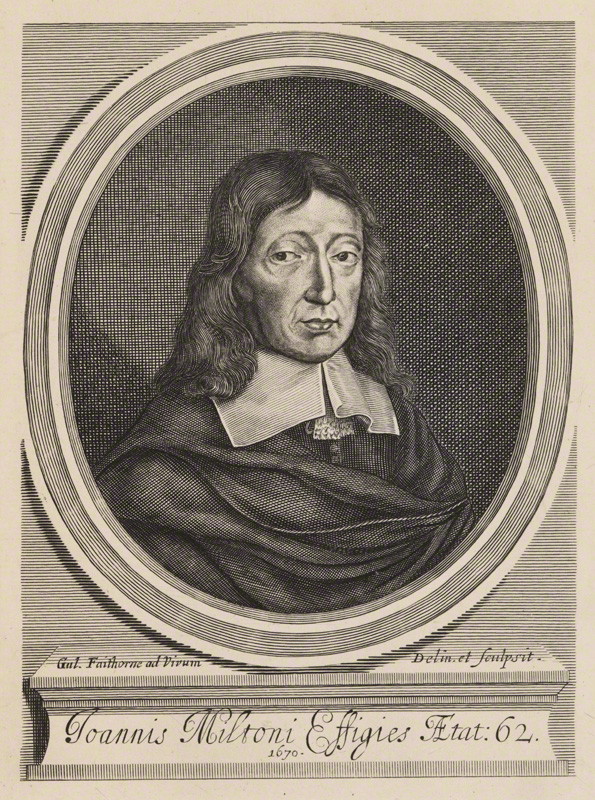
 Milton was discreet enough to retreat from London to Chalfont St Giles. It's said his friends and admirers intervened on his behalf, suggesting that his blindness was a divine punishment and that it would be wrong for the king to punish the poet further. The poet was allowed to live and completed his great works of the Restoration: Samson Agonistes, Paradise Lost and Paradise Regained.
 There is, currently, less publicity for the imprisonment and torture of Uzbek poet Yusuf Juma. Perhaps everyone is distracted by the Olympic Games or the news from Georgia. Or perhaps we're all so used to the atrocities of Karimov's regime that a tortured poet barely disturbs any more. But he will not be forgotten. Osip Mandelstam's poem against Stalin resonates more strongly because of Mandelstam's arrest, mistreatment and death.